When choosing a diesel generator for an industrial project, commercial facility, or backup power system, one of the first technical questions is whether you need a 50Hz or 60Hz unit. The difference is not simply about how fast the generator runs. It affects engine speed, alternator configuration, output voltage, connected equipment compatibility, and the electrical standards of the destination market.
The main difference between a 50Hz and 60Hz diesel generator is the electrical output frequency. A typical four-pole generator operates at 1,500 RPM to produce 50Hz power and 1,800 RPM to produce 60Hz power. However, the correct configuration depends on the alternator pole count, destination grid, voltage requirements, and connected loads.
For global buyers, neither frequency is universally better. A 50Hz diesel generator is suitable for markets operating on a 50Hz electrical system, while a 60Hz generator is designed for 60Hz applications. Choosing the wrong frequency can affect motor speed, electrical performance, and equipment service life.
LEHUI (FUZHOU) INTELLIGENT EQUIPMENT MANUFACTURING CO., LTD supplies diesel generator sets for international industrial and commercial applications. Its product portfolio covers 5kVA to 5000kVA, with different engine brands, power configurations, and 50Hz or 60Hz options according to project requirements.
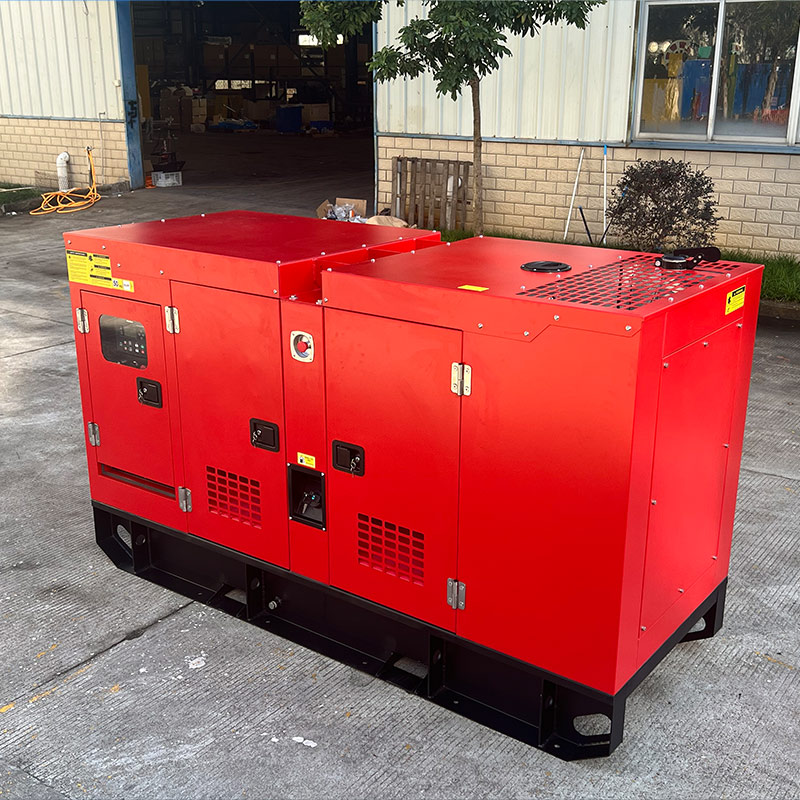
This guide compares 50Hz vs 60Hz diesel generators from an engineering and procurement perspective, covering operating speed, voltage, regional standards, fuel consumption, maintenance, and generator selection. It also explains what international buyers should confirm before requesting a quotation from a diesel generator manufacturer.
Key Differences Between 50Hz and 60Hz Diesel Generators
The most important distinction is the number of alternating current cycles produced per second. A 50Hz generator produces 50 electrical cycles per second, whereas a 60Hz generator produces 60 cycles per second.
This difference influences the synchronous speed of the alternator and, in a conventional direct-drive diesel generator set, the required engine operating speed.
| Comparison | 50Hz Diesel Generator | 60Hz Diesel Generator |
|---|---|---|
| Output frequency | 50 cycles per second | 60 cycles per second |
| Typical four-pole speed | 1,500 RPM | 1,800 RPM |
| Typical two-pole speed | 3,000 RPM | 3,600 RPM |
| Common low-voltage systems | 220V / 230V / 380V / 400V / 415V | 120V / 208V / 240V / 480V |
| Typical applications | European, African, Asian, and other 50Hz markets | North American and other 60Hz markets |
| Main selection factor | Destination grid and equipment ratings | Destination grid and equipment ratings |
These voltage values are common examples rather than fixed requirements for every country. Actual generator output configurations depend on the local electrical distribution system and project specifications.
For procurement teams, the practical rule is straightforward: confirm the required frequency first, then specify voltage, phase, rated power, and duty type. LEHUI provides both 50Hz Diesel Generator Sets and 60Hz configurations for different destination markets.
How Does Generator Frequency Affect Engine RPM?
Generator frequency and alternator rotational speed are directly related. In a synchronous alternator, the relationship is determined by the number of magnetic poles and rotational speed.
The standard synchronous speed formula is:
N = 120 × f / P
Where:
- N = Synchronous speed in revolutions per minute (RPM)
- f = Electrical frequency in hertz (Hz)
- P = Number of alternator poles
For a four-pole alternator, the engine and alternator typically operate at 1,500 RPM for 50Hz output or 1,800 RPM for 60Hz output.
However, not every diesel generator operates at these speeds. Two-pole, six-pole, and eight-pole alternators use different synchronous speeds.
| Alternator Poles | 50Hz Speed | 60Hz Speed |
|---|---|---|
| 2 poles | 3,000 RPM | 3,600 RPM |
| 4 poles | 1,500 RPM | 1,800 RPM |
| 6 poles | 1,000 RPM | 1,200 RPM |
| 8 poles | 750 RPM | 900 RPM |
Most industrial diesel generator sets use four-pole alternators. This is why 1,500 RPM and 1,800 RPM are widely referenced when buyers compare 50Hz and 60Hz generator configurations.
Engine speed also affects the generator's mechanical operating conditions. However, operating speed alone does not determine service life, maintenance intervals, or reliability. Engine design, lubrication, cooling, load factor, and manufacturer maintenance recommendations are equally important.
When specifying a generator, buyers should check the engine nameplate, alternator nameplate, rated frequency, and controller settings together. The engine and alternator must be correctly matched for the required electrical output.
Which Countries Use 50Hz and 60Hz Electricity?
Electrical frequency is determined by the established power grid of each country or region. Buyers importing diesel generators should verify the local utility standard rather than selecting a generator based only on the destination country's name.
Countries and regions commonly using 50Hz electricity include:
- United Kingdom and most European countries
- Australia and New Zealand
- China and most Asian countries
- India and many South Asian markets
- United Arab Emirates and many Middle Eastern markets
- South Africa and many African countries
Countries and regions commonly using 60Hz electricity include:
- United States
- Canada
- Mexico
- South Korea
- Taiwan
- Brazil and several other countries in the Americas
Japan is an important exception because different parts of the country use different grid frequencies. Other markets may also have special industrial or isolated power systems.
The following table provides representative examples of commonly used electrical standards.
| Country / Market | Common Voltage | Frequency |
|---|---|---|
| United Kingdom | 230V | 50Hz |
| Australia | 230V | 50Hz |
| China | 220V | 50Hz |
| India | 230V | 50Hz |
| United Arab Emirates | 230V | 50Hz |
| United States | 120V / 240V | 60Hz |
| Canada | 120V / 240V | 60Hz |
| Mexico | 127V / 220V | 60Hz |
| South Korea | 220V | 60Hz |
| Brazil | 127V / 220V | 60Hz |
Voltage configurations shown above are representative values. Actual supply arrangements can vary by region, building, and industrial installation.
For international generator procurement, the destination grid frequency is only the starting point. You should also confirm the required three-phase or single-phase output, line-to-line voltage, line-to-neutral voltage, and grounding arrangement.
LEHUI supplies generator configurations for different international markets. Buyers can compare available 60Hz Diesel Generator Sets for North American and other 60Hz applications.
Technical Comparison of 50Hz vs 60Hz Diesel Generators
Although the two generator types perform the same basic function, their operating specifications and electrical characteristics differ. These differences become particularly important when supplying industrial equipment, motors, pumps, compressors, and sensitive electrical systems.
Engine Speed and Mechanical Operation
For a four-pole alternator, a 50Hz generator normally operates at 1,500 RPM, while a 60Hz generator operates at 1,800 RPM.
A higher operating speed means more engine revolutions per hour. However, this does not automatically mean that a 60Hz generator has a shorter service life. Modern diesel engines are designed and tested for their specified rated speed and duty cycle.
Maintenance schedules should follow the engine manufacturer's recommendations rather than a general assumption that one frequency requires more frequent servicing.
Voltage and Phase Configuration
Voltage and frequency are related in generator design, but they are separate electrical specifications. A generator may be configured for different output voltages depending on the alternator winding arrangement, connections, and rated frequency.
Common industrial configurations include:
- 50Hz three-phase systems: 380V, 400V, 415V, and selected medium-voltage configurations.
- 60Hz three-phase systems: 208V, 240V, 480V, and 600V in applicable markets.
- Single-phase systems: 110V, 120V, 220V, 230V, and 240V depending on the market.
For example, a factory in a 50Hz market may require a 400V three-phase diesel generator, while an industrial facility in the United States may specify a 480V three-phase 60Hz generator.
Do not assume that changing the frequency alone will automatically produce the correct voltage. The alternator, AVR, winding connections, and output protection must be configured for the intended application.
Fuel Consumption and Operating Efficiency
Fuel consumption is one of the main considerations when purchasing an industrial diesel generator. However, frequency alone cannot determine which generator will consume less fuel.
Actual fuel consumption depends on several factors:
- Engine brand and model
- Generator rated power and engine displacement
- Actual operating load percentage
- Engine combustion and fuel injection technology
- Cooling system and ambient temperature
- Maintenance condition and fuel quality
For an accurate comparison, buyers should request fuel consumption data at the same load percentages, such as 25%, 50%, 75%, and 100% of the rated output.
Comparing the fuel consumption of two generators at different rated capacities or different load conditions does not provide a reliable efficiency comparison.
LEHUI provides model-specific generator specifications, including rated output and fuel consumption information. Buyers can use these figures to estimate operating costs before selecting a suitable power solution.
Noise and Vibration
Noise and vibration depend on engine design, operating speed, exhaust configuration, enclosure construction, and installation conditions.
A 50Hz generator and a 60Hz generator can both be designed with sound-attenuated enclosures for commercial and industrial applications. The actual noise level should be evaluated using the manufacturer's stated test conditions, including measurement distance and operating load.
For projects near residential buildings, hospitals, hotels, or commercial facilities, buyers should specify the required noise level before ordering.
Maintenance and Service Life
Both 50Hz and 60Hz diesel generator sets can provide long-term service when correctly selected, installed, and maintained.
Important maintenance considerations include engine oil replacement, fuel filter inspection, air filter maintenance, coolant checks, battery condition, alternator inspection, and periodic load testing.
For buyers operating multiple generator sets, the availability of replacement parts and qualified local service technicians should also be considered when choosing an engine brand and generator configuration.
What Happens When a Generator Frequency Does Not Match the Load?
Using a generator with the wrong frequency can cause electrical and mechanical problems, particularly when the connected equipment is designed for a fixed supply frequency.
The effects depend on the equipment type, motor design, voltage, and operating conditions.
Impact on Induction Motors
For an induction motor with the same number of poles, synchronous speed is proportional to supply frequency. If a motor designed for 50Hz operates at 60Hz, its synchronous speed increases by 20%. If a 60Hz motor operates at 50Hz, its synchronous speed decreases by approximately 16.7%.
Actual motor speed is slightly lower than synchronous speed because of slip.
For centrifugal pumps and fans, a speed increase can have a much larger effect on power demand. Under comparable operating conditions, the affinity laws indicate that power demand can rise approximately with the cube of rotational speed.
This means that a 20% speed increase can theoretically result in approximately 73% higher power demand for a centrifugal load. The actual operating result depends on the system curve, motor rating, and equipment design.
Impact on Transformers and Electrical Equipment
Transformers and other magnetic equipment are designed for particular voltage and frequency conditions. Operating them at a lower frequency without adjusting voltage can increase the magnetic flux density and potentially cause core saturation and overheating.
Electronic equipment, UPS systems, variable frequency drives, and control panels may support both 50Hz and 60Hz input power, but this must be verified from their technical datasheets.
Impact on Generator Grid Synchronization
A generator operating in parallel with a utility grid must match the grid's frequency, voltage, phase sequence, and phase angle within the applicable synchronization limits.
A 60Hz generator cannot directly synchronize with a 50Hz utility grid at its normal rated output frequency. A suitable frequency conversion or specifically engineered power conversion arrangement would be required for such an application.
Incorrect synchronization can produce severe electrical and mechanical stresses, damage switchgear, and create serious safety hazards.
For this reason, frequency compatibility should be confirmed before procurement, especially for grid-parallel, peak-shaving, and critical backup power projects.
How to Choose the Right Diesel Generator Frequency for Your Project
For global buyers, selecting the right generator requires more than comparing product prices and rated power. The frequency, voltage, phase, load characteristics, and operating environment must all match the project requirements.
Confirm the Destination Country and Grid Frequency
Start by identifying where the generator will be installed. Confirm whether the local electrical system uses 50Hz or 60Hz power.
If the generator is intended for export, specify the final destination before requesting a quotation. The same generator model may require different configurations for different markets.
Check Voltage and Phase Requirements
Review the electrical specifications of the equipment that will be connected to the generator.
Confirm whether the project requires single-phase or three-phase power, the rated voltage, neutral configuration, and grounding requirements.
For industrial projects, it is important to check the voltage requirements of large motors, compressors, pumps, production lines, and other high-power equipment.
Calculate the Required Generator Capacity
Generator capacity should be determined by the actual electrical load rather than the total connected equipment nameplate values alone.
Consider the following factors:
- Total running power demand in kW and kVA
- Power factor of connected equipment
- Motor starting current and transient loads
- Simultaneous operating requirements
- Future expansion and additional equipment
- Standby, prime, or continuous operating requirements
Large motor starting loads can require additional generator capacity because the initial current demand may be significantly higher than normal running current.
Select the Appropriate Generator Duty Rating
Diesel generator sets are commonly offered with different power ratings, including Prime Power (PRP) and Emergency Standby Power (ESP).
Prime Power is intended for applications with varying loads and operating hours under the applicable rating conditions. Emergency Standby Power is intended for emergency backup applications with specified operating limitations.
Buyers should compare the correct rating basis rather than treating PRP and ESP values as interchangeable.
Consider Environmental and Installation Conditions
Ambient temperature, altitude, humidity, dust, ventilation, and installation location can affect generator performance.
Projects in hot climates may require customized cooling systems, while outdoor installations may need weather-resistant enclosures. Industrial sites with high dust levels may require additional filtration and protection.
LEHUI provides customized generator configurations for different industrial and commercial applications, including enclosure, cooling, and power requirements.
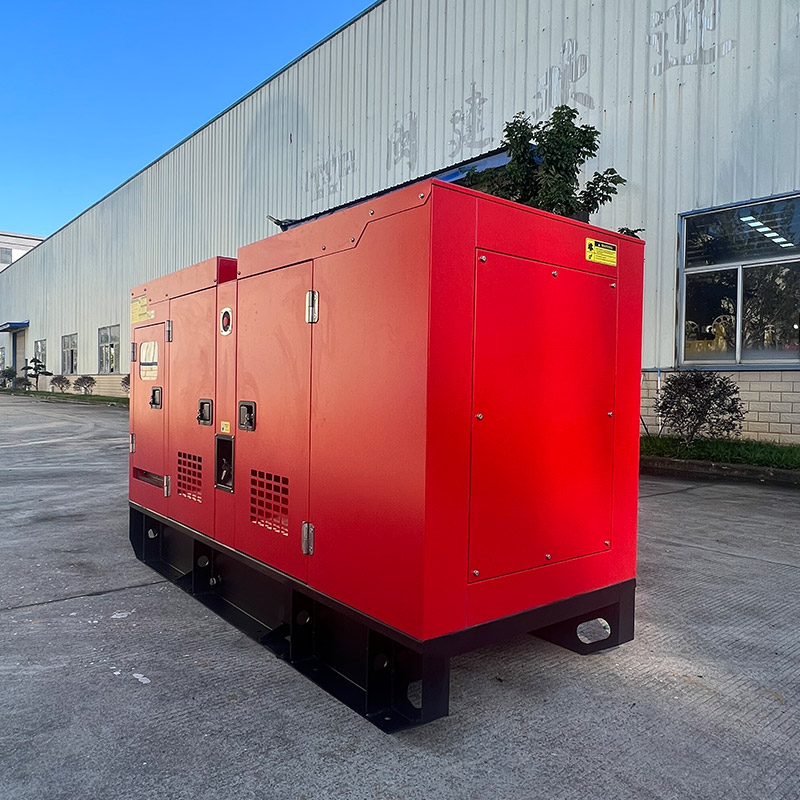
Before finalizing a specification, buyers can compare the available LEHUI Diesel Generator Set Product Range to identify suitable power capacities and engine configurations.
Can a Diesel Generator Be Converted Between 50Hz and 60Hz?
Some diesel generator sets can be reconfigured between 50Hz and 60Hz, but this depends on the engine, alternator, winding arrangement, controller, AVR, and rated output limitations.
Changing the output frequency is not simply a matter of changing a setting on the control panel.
For a conventional four-pole generator, changing from 50Hz to 60Hz normally requires increasing the operating speed from 1,500 RPM to 1,800 RPM.
The conversion may involve:
- Adjusting the engine governor and rated operating speed
- Checking alternator winding connections and voltage ratings
- Reconfiguring or recalibrating the AVR where required
- Verifying controller frequency and protection settings
- Checking breaker and electrical protection compatibility
- Performing a complete electrical and load test after conversion
Not every generator is suitable for frequency conversion. Some engines and alternators have specific rated operating limits, and changing frequency may affect available output power or equipment ratings.
For this reason, buyers should consult the generator manufacturer before attempting any reconfiguration.
For a fixed installation, purchasing a generator designed for the required frequency is generally the more straightforward option. For rental fleets, marine applications, and equipment serving multiple regions, a specially engineered multi-frequency solution may be worth evaluating.
Diesel Generator Specifications and Product Options from LEHUI
LEHUI (FUZHOU) INTELLIGENT EQUIPMENT MANUFACTURING CO., LTD is a power equipment manufacturer supplying diesel generator sets, mobile light towers, hybrid power systems, and customized equipment for international customers.
Its diesel generator portfolio covers a power range from 5kVA to 5000kVA, with engine options including Cummins, Perkins, MTU, Scania, Volvo, Doosan, SDEC, Kohler, Kubota, Baudouin, Weichai, and FAWDE. Alternator options include Leroy-Somer and Stamford.
For international projects, buyers can specify the required frequency, voltage, phase, engine brand, rated output, and enclosure configuration according to their application.
Example of a 50Hz Diesel Generator
LEHUI offers the Cummins 500kVA diesel generator set designed for 50Hz applications.
- Model: LH-C500P
- Rated Prime Power: 400kW / 500kVA
- Standby Power: 440kW / 550kVA
- Engine: Cummins KTA19-G3A
- Frequency: 50Hz
- Full-load fuel consumption: 107 L/h (published product specification)
This model is suitable for buyers evaluating medium-to-large capacity industrial and commercial power applications, subject to the final project load and operating conditions.
View the LEHUI Cummins 500kVA 50Hz Diesel Generator for detailed product information.
Example of a 60Hz Diesel Generator
For 60Hz applications, LEHUI offers a Cummins 30kVA industrial diesel generator set.
- Model: LHX-C30P
- Rated Prime Power: 24kW / 30kVA
- Standby Power: 26kW / 33kVA
- Engine: Cummins 4B3.9-G2
- Frequency: 60Hz
- Full-load fuel consumption: 8.6 L/h (published product specification)
This compact generator is suitable for smaller commercial and industrial backup power requirements, depending on the connected load.
Explore the LEHUI Cummins 30kVA 60Hz Industrial Diesel Generator for its product specifications and configuration details.
The two models above are examples of LEHUI's different frequency and capacity options. They are not direct performance comparisons because their rated power and engine configurations are different.
What Should Global Buyers Check Before Ordering a Diesel Generator?
International generator procurement involves technical specifications, manufacturing requirements, shipping arrangements, and local compliance. Confirming these details before production helps reduce specification changes and delivery problems.
Before placing an order, buyers should prepare the following information:
| Procurement Item | Information to Confirm |
|---|---|
| Destination market | Country, installation location, and local grid standard |
| Frequency | 50Hz or 60Hz |
| Voltage and phase | Rated voltage, single-phase or three-phase, and connection arrangement |
| Power capacity | Required kW, kVA, PRP, and ESP ratings |
| Engine and alternator | Preferred brands, model, and technical configuration |
| Control system | Manual, automatic, ATS, remote monitoring, or synchronization requirements |
| Installation conditions | Indoor or outdoor, temperature, altitude, dust, and noise requirements |
| Compliance | Applicable emissions, safety, and destination-market documentation |
| Shipping | Packaging, dimensions, weight, and delivery destination |
Buyers should also request the generator's technical datasheet, engine and alternator specifications, factory test records, and applicable certificates or declarations.
For US-bound projects, emissions compliance should be checked against the applicable EPA requirements for the specific engine, model year, power category, and application. For European projects, confirm the relevant CE conformity and applicable EU requirements. ISO 9001 relates to quality management and should not be treated as a substitute for product-specific regulatory approval.
For export projects, LEHUI can discuss the required technical documentation and generator configuration with buyers before order confirmation.
Why Choose LEHUI for 50Hz and 60Hz Diesel Generators?
Selecting a diesel generator manufacturer involves more than finding a supplier with an attractive price. Engineering support, product configuration, quality control, and after-sales service all affect the long-term value of the equipment.
LEHUI focuses on diesel generator sets and industrial power equipment for different international applications.
Wide Generator Power Range
LEHUI supplies generator sets ranging from 5kVA to 5000kVA, covering smaller commercial requirements and large industrial power projects.
Multiple Engine and Alternator Options
Buyers can specify different engine brands and alternator configurations according to project requirements, power ratings, and local service availability.
50Hz and 60Hz Product Configurations
LEHUI offers generator sets for both frequency standards, helping international buyers select equipment suitable for their destination electrical system.
Customized Generator Solutions
Generator configurations can be discussed according to enclosure design, cooling requirements, control systems, output voltage, power capacity, and installation conditions.
Factory Testing and Quality Control
LEHUI product information identifies load testing at 25%, 50%, 75%, 100%, and 110% before delivery for applicable generator configurations. Buyers can confirm the specific factory test procedure and report requirements when placing an order.
Support for International Projects
LEHUI works with customers on generator selection, technical specifications, export documentation, and project-specific power requirements.
Whether you need a 50Hz generator for an industrial facility in Europe, Africa, or Asia, or a 60Hz generator for a commercial or industrial project in North America, the correct configuration starts with your actual electrical requirements.
Final Considerations for Choosing Between 50Hz and 60Hz Generators
The choice between a 50Hz and 60Hz diesel generator should always be based on the destination power system and the electrical requirements of the connected equipment.
A 50Hz generator typically operates at 1,500 RPM with a four-pole alternator, while a comparable 60Hz generator operates at 1,800 RPM. However, alternator pole count, rated voltage, phase configuration, engine specifications, and load requirements all need to be considered.
Neither frequency is inherently more efficient, more durable, or more suitable for every application. A properly specified generator is the one that matches the project's electrical system, operating conditions, and power demand.
LEHUI provides 50Hz and 60Hz diesel generator solutions across a wide power range, with multiple engine brands and customized configurations for international buyers.
If you are planning a new power project or sourcing diesel generator sets for distribution, contact LEHUI with your destination country, required frequency, voltage, phase, and power capacity. The team can help you evaluate a suitable generator configuration for your application.
Contact LEHUI for Diesel Generator Specifications and a Project Quotation
Frequently Asked Questions About 50Hz and 60Hz Diesel Generators
What is the main difference between a 50Hz and 60Hz diesel generator?
The main difference is electrical output frequency. A 50Hz generator produces 50 electrical cycles per second, while a 60Hz generator produces 60 cycles per second. This affects alternator speed, motor operating speed, and electrical equipment compatibility.
What RPM does a 50Hz diesel generator run at?
A typical four-pole 50Hz diesel generator operates at 1,500 RPM. A two-pole unit operates at 3,000 RPM. Actual rated speed depends on the alternator pole count.
What RPM does a 60Hz diesel generator run at?
A typical four-pole 60Hz diesel generator operates at 1,800 RPM, while a two-pole unit operates at 3,600 RPM.
Which is better, a 50Hz or 60Hz diesel generator?
Neither is universally better. The correct choice depends on the destination country's electrical frequency, required voltage, phase configuration, and connected equipment specifications.
Which countries commonly use 50Hz diesel generators?
Countries such as the United Kingdom, Germany, France, China, India, Australia, and the United Arab Emirates commonly use 50Hz electricity. Buyers should confirm the local grid standard before ordering.
Which countries commonly use 60Hz diesel generators?
The United States, Canada, Mexico, South Korea, Taiwan, and Brazil commonly use 60Hz electricity. Local industrial power requirements should still be verified.
Can I use a 60Hz diesel generator in a 50Hz country?
Not directly for a conventional application designed around the local 50Hz grid. The generator frequency and connected equipment must be compatible. A properly engineered frequency conversion system may be required for special applications.
Can a 50Hz generator be converted to 60Hz?
Some generators can be reconfigured, but conversion depends on the engine, alternator, winding connections, AVR, controller, and rated output limitations. Manufacturer approval and electrical testing are necessary.
Does a 50Hz diesel generator consume less fuel than a 60Hz generator?
Not necessarily. Fuel consumption depends on engine model, generator capacity, load factor, and operating conditions. Compare manufacturer fuel consumption data at equivalent load percentages for an accurate assessment.
Does generator frequency affect motor speed?
Yes. For an induction motor with the same number of poles, synchronous speed changes in proportion to supply frequency. A 50Hz motor supplied at 60Hz has a theoretical synchronous speed increase of 20%, while a 60Hz motor supplied at 50Hz has a decrease of approximately 16.7%.
What voltage should I choose for a 50Hz or 60Hz diesel generator?
Voltage depends on the local electrical distribution system and connected equipment. Common 50Hz configurations include 380V, 400V, and 415V three-phase output. Common 60Hz configurations include 208V, 240V, 480V, and 600V in applicable markets.
Does LEHUI supply both 50Hz and 60Hz diesel generators?
Yes. LEHUI offers diesel generator sets in both 50Hz and 60Hz configurations, with different power capacities, engine brands, alternator options, and customized specifications for international projects.
What information should I provide when requesting a diesel generator quotation?
Provide the destination country, required frequency, voltage, phase, rated kW or kVA, application, operating duty, preferred engine brand, and installation conditions. These details help the manufacturer recommend a suitable generator configuration.