Mining operations depend on a stable power supply to keep equipment running, maintain site safety, and avoid costly production interruptions. In remote mining locations, where grid access may be limited or unreliable, diesel generators often serve as the primary source of electricity for daily operations.
From drilling equipment and water pumps to ventilation systems, crushers, workshops, site offices, and temporary facilities, different mining loads require different power capacities and operating characteristics. Choosing a generator based only on its rated kVA can lead to overloads, excessive fuel consumption, or insufficient power during equipment startup.
Diesel generator solutions for the mining industry should therefore be designed around the site's actual load profile, operating hours, environmental conditions, fuel logistics, and future expansion plans. This guide explains how mining companies can select, configure, and maintain reliable generator systems for both remote and large-scale mining operations.
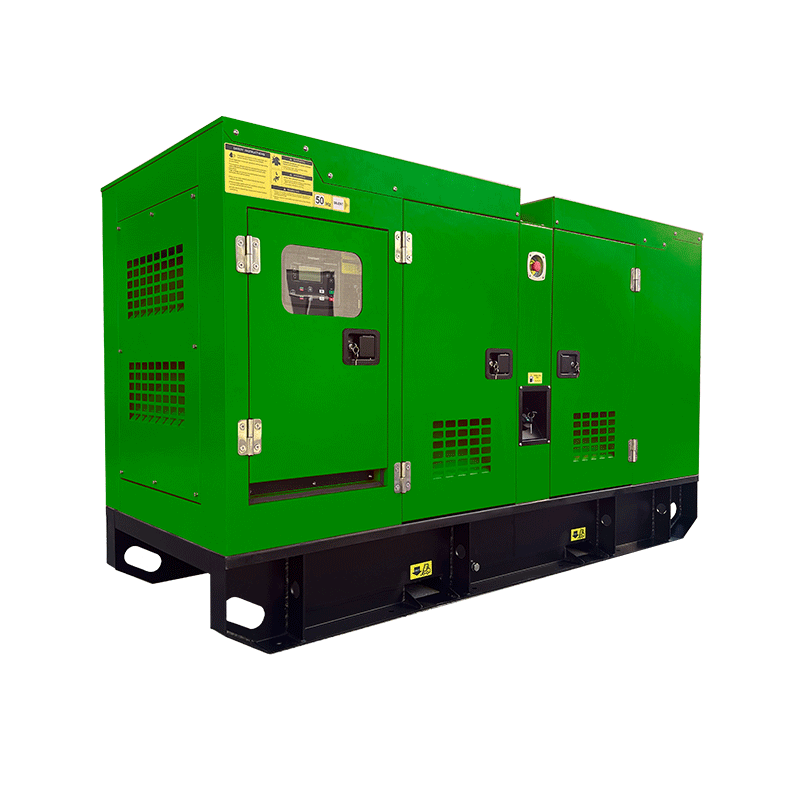
Why Diesel Generators Are Widely Used in Mining Operations
Mining sites are often located far from urban infrastructure. Underground mines, open-pit mines, mineral processing plants, exploration camps, and temporary mining projects may need to operate independently from the public electricity grid.
Diesel generator sets provide a practical power source because they can be deployed in remote locations, configured for different power requirements, and used as primary or standby power depending on the project design.
Common mining applications include:
- Mining machinery, drilling equipment, and auxiliary equipment
- Crusher systems, conveyors, and mineral processing equipment
- Water pumps, drainage systems, and dewatering equipment
- Ventilation fans and air circulation systems
- Site offices, workshops, accommodation, and temporary facilities
- Lighting systems for night shifts and outdoor work areas
- Emergency power for critical equipment and safety systems
For mines without dependable grid electricity, diesel generators may operate continuously as the main power source. In grid-connected mines, they may provide standby power or support loads during outages and peak-demand periods.
LEHUI supplies generator sets across a broad power range for industrial applications. Buyers can review the available industrial diesel generator range to compare power ratings, engine options, and configurations for different mining requirements.
Primary Power and Standby Power for Mining Sites
Before selecting a mining generator, determine whether the equipment will operate as prime power, continuous power, or standby power. These duty classifications affect generator sizing, maintenance planning, and operating expectations.
| Power Application | Typical Mining Scenario | Selection Consideration |
|---|---|---|
| Prime power | Remote mine operating without a reliable utility supply | Variable loads, operating hours, maintenance intervals, fuel supply |
| Continuous power | Long-duration operation with a relatively stable load profile | Manufacturer rating, cooling, service requirements, load management |
| Standby power | Grid-connected mine requiring backup during outages | Emergency load, automatic transfer, starting sequence |
| Supplementary power | Generator supporting a grid or hybrid system | Synchronization, control strategy, load sharing, system compatibility |
A generator intended for long operating hours should be selected according to the manufacturer's prime or continuous rating rather than relying on the standby rating. Standby capacity is generally intended for emergency operation and should not automatically be treated as the available capacity for daily mining production.
For projects requiring continuous power, buyers should confirm the rated operating conditions, allowable load profile, service intervals, and whether the generator is designed for the expected duty cycle.
How to Calculate the Required Generator Capacity for a Mine
Mining generator sizing begins with an electrical load list. The calculation should include equipment rated power, operating demand, motor starting requirements, power factor, and the sequence in which loads are switched on.
A simple preliminary calculation is:
Required generator capacity (kVA) = Total operating load (kW) ÷ Power factor
This formula provides a preliminary estimate of apparent power. It does not replace a detailed generator sizing study, particularly when the site includes large motors, variable-frequency drives, welding equipment, crushers, or other loads with significant starting or transient requirements.
For example, if a mining site has an estimated simultaneous operating load of 320 kW and an assumed power factor of 0.8:
320 kW ÷ 0.8 = 400 kVA
This means the preliminary apparent power requirement is 400 kVA before considering additional sizing factors. The final generator selection must also account for motor starting, load step response, site altitude, ambient temperature, harmonics, and the manufacturer's derating recommendations.
Mining equipment may start at different times. A crusher, pump, or ventilation motor can create a substantial temporary demand. If several large motors start simultaneously, the generator may experience voltage or frequency dips even when the steady-state load appears acceptable.
For that reason, mining engineers should provide the supplier with a load schedule, motor specifications, startup methods, and operating sequence before selecting a generator model.
Which Generator Capacity Is Suitable for Different Mining Applications?
Mining projects vary considerably in scale. A small exploration camp may require power for accommodation, communications, lighting, and water pumps, while a large mineral processing operation may need multiple high-capacity generator sets to support production equipment.
| Mining Application | Indicative Power Range | Typical Loads |
|---|---|---|
| Exploration camp or small site | 20–100 kVA | Lighting, offices, small pumps, communications, accommodation |
| Temporary mine facilities | 100–500 kVA | Workshops, pumps, compressors, auxiliary equipment |
| Medium mining operations | 500–1500 kVA | Processing equipment, conveyors, larger pumps, site distribution |
| Large mining and processing plants | 1500 kVA and above | Heavy industrial loads, processing lines, multiple electrical systems |
These ranges are illustrative planning references, not fixed recommendations. The actual generator size depends on the connected equipment, simultaneous demand, operating mode, redundancy requirements, and site conditions.
A smaller generator may be suitable for a dedicated pump station or remote camp, while a large mining operation may require multiple generator sets operating in parallel to provide capacity and redundancy.
For example, LEHUI's 80kVA diesel generator designed for mining applications is a model intended for smaller or auxiliary mining loads. The product page lists 64 kW / 80 kVA prime power, 68 kW / 85 kVA standby power, and a Cummins 4BTA3.9-G11 engine.
Choosing a Generator for Dust, Heat, and Harsh Mining Conditions
Mining environments can be demanding for generator equipment. Dust, high ambient temperatures, vibration, uneven ground, and limited maintenance access may affect performance if the generator is not configured appropriately.
Dust protection: Fine mineral dust can accumulate on cooling surfaces, air filters, electrical components, and ventilation openings. Appropriate filtration, enclosure design, inspection routines, and cleaning intervals are important.
High ambient temperatures: Hot climates can reduce available engine and generator output if the equipment is not properly rated for the site conditions. Cooling capacity, airflow, radiator design, and derating should be reviewed.
Vibration and transport: Mining locations may involve rough access roads and frequent equipment relocation. Skid-mounted designs, lifting points, and suitable transport arrangements help simplify installation and movement.
Weather exposure: Outdoor generator installations need protection appropriate to rain, dust, wind, and the site's environmental conditions. Enclosure and electrical protection specifications should be checked against the actual exposure.
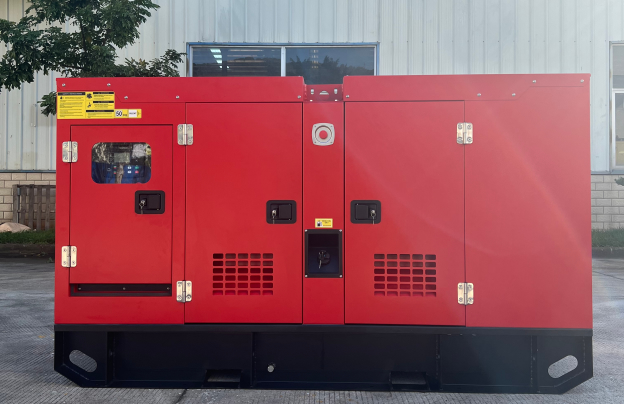
LEHUI provides generator configurations for demanding environments, including a 65kVA diesel generator for harsh and dusty conditions. For more demanding installations, buyers should discuss environmental protection, cooling, filtration, and any necessary site-specific modifications with the manufacturer.
Fuel Consumption and Operating Costs at Mining Sites
Fuel is often one of the largest operating expenses for a diesel generator at a remote mining site. A generator that runs for long hours can consume substantial amounts of diesel, making fuel efficiency, load management, and delivery planning important parts of the power strategy.
Actual fuel consumption depends on engine model, generator capacity, load percentage, altitude, temperature, maintenance condition, and fuel quality. Manufacturer figures should be used as a reference, while project planning should consider the expected operating load rather than assuming the generator always runs at full capacity.
For example, LEHUI lists the 80kVA mining generator's fuel consumption at 17.6 L/h at 100% load. If the unit were to operate at that published full-load consumption for 10 hours, the theoretical fuel requirement would be:
17.6 L/h × 10 hours = 176 liters
This is a simple full-load calculation using the published specification, not a prediction of actual site consumption. The real fuel requirement will vary with the operating load and site conditions.
Mining operators can reduce fuel-related costs by:
- Selecting a generator that matches the actual operating load.
- Avoiding prolonged operation at very low loads where the engine manufacturer's guidance recommends otherwise.
- Scheduling large loads to avoid unnecessary simultaneous peaks.
- Maintaining clean air filters, fuel filters, cooling systems, and injectors.
- Monitoring operating hours, fuel consumption, and load percentage.
- Evaluating hybrid power systems where renewable energy and battery storage are practical.
For remote operations, fuel storage capacity and delivery frequency should be planned together with generator sizing. The site should maintain an appropriate fuel reserve based on access conditions, expected consumption, delivery lead times, and local safety requirements.
Single Generator or Multiple Generator Sets in Parallel?
Large mining operations often have variable power demand. Production equipment may operate during certain shifts, while other loads continue throughout the day or night. A single large generator may not always be the most efficient arrangement.
Multiple generator sets operating in parallel can offer several advantages when properly engineered:
- Load sharing between generator sets.
- Flexibility to run fewer units during periods of lower demand.
- Additional redundancy when one unit is unavailable for maintenance.
- Capacity expansion as the mining project grows.
- Potentially improved fuel efficiency when units are operated closer to their preferred loading range.
Parallel operation requires compatible generator ratings, synchronization equipment, protection systems, load-sharing controls, and a properly designed electrical distribution system. Not every generator can be connected in parallel without the necessary equipment and engineering.
For large-scale mining projects, the power system should be designed with the electrical engineer and generator supplier to establish the operating philosophy, redundancy level, synchronization requirements, and maintenance strategy.
Containerized Diesel Generators for Remote Mining Power
Containerized generator sets are often considered for remote mining sites that need higher power capacity, weather protection, simplified transportation, or a more integrated installation.
Depending on the design, a containerized generator may incorporate an engine, alternator, control system, ventilation, cooling, acoustic treatment, and service access within a dedicated enclosure. The configuration can be adapted to project requirements.
Containerized systems may be useful for:
- Remote mines with limited infrastructure
- Large processing facilities requiring high power
- Temporary mining projects and power expansion
- Sites where transportation and installation planning are important
- Outdoor installations requiring an integrated enclosure
LEHUI's large-capacity equipment includes containerized generator configurations, such as its 2844kVA Cummins container diesel generator. This product is designed for large power applications and provides an example of the type of equipment that may be considered for high-demand industrial projects.
Container design, cooling airflow, fuel systems, access for maintenance, lifting arrangements, and site foundations should all be reviewed before ordering.
Mining Site Lighting and Auxiliary Power
Mining operations frequently continue after sunset. Lighting is required around excavation areas, access roads, loading zones, workshops, maintenance areas, stockpiles, and temporary work locations.
While fixed lighting systems may be suitable for permanent installations, mobile light towers can provide flexibility for work areas that move as the mining operation progresses.
Diesel-powered mobile light towers are useful where fuel and maintenance infrastructure are already available. Solar light towers or hybrid lighting systems may be suitable for locations where reducing fuel consumption, noise, or routine servicing is a priority.
For mining contractors and site managers, mobile lighting should be selected according to the work area, required illumination, mast height, light output, runtime, transport needs, and environmental conditions.
LEHUI offers mobile light tower solutions for construction, industrial, and outdoor applications, including configurations designed for different lighting and deployment requirements.
Diesel Generator Maintenance for Mining Operations
Maintenance planning is especially important at remote mining sites, where a generator failure can interrupt production and require costly transportation or repair work. A preventive maintenance program should follow the engine and generator manufacturer's instructions and be adapted to site conditions.
Typical maintenance checks include:
| Maintenance Item | Why It Matters |
|---|---|
| Engine oil and oil filter | Lubrication and protection of engine components |
| Air filter | Prevents excessive dust from entering the engine |
| Fuel filter and fuel quality | Supports clean fuel delivery and reliable operation |
| Cooling system | Helps prevent overheating under demanding loads |
| Battery and starting system | Ensures reliable startup when power is required |
| Electrical connections and control panel | Helps identify loose connections, alarms, and abnormal conditions |
| Load testing and operating records | Verifies operation and supports maintenance planning |
Dust-heavy mining environments may require more frequent filter inspection and cleaning than standard industrial installations. Operators should follow the manufacturer's service intervals and adjust inspection frequency according to actual site conditions.
Keeping essential spare parts, filters, lubricants, and maintenance tools on site can also reduce downtime when the mine is far from service centers.
Hybrid Power Systems for Mining and Remote Sites
Diesel generators remain an important source of power for mining operations, but some sites can reduce fuel consumption by integrating solar power and battery energy storage.
A hybrid power system may combine:
- Diesel generator sets for dependable power supply
- Solar photovoltaic panels to generate electricity during daylight
- Battery energy storage to manage energy demand and support selected loads
- An integrated control system to coordinate power sources
In a properly designed hybrid system, batteries may supply part of the load during lower-demand periods, while the generator operates when needed to meet power requirements or recharge the storage system. The actual operating strategy depends on system design and site conditions.
Hybrid power can be particularly worth evaluating for remote camps, offices, communications facilities, and auxiliary loads where demand is relatively predictable. Heavy processing loads may still require substantial generator capacity.
LEHUI provides customized hybrid power systems combining generators, solar energy, and batteries for applications where integrated energy solutions are required.
What Mining Companies Should Confirm Before Buying a Generator
When requesting a quotation for a mining diesel generator, providing complete project information can help the supplier recommend a more suitable configuration.
- Required power capacity in kW and kVA
- Prime power or standby power application
- Operating hours per day and expected duty cycle
- Main equipment and motor starting requirements
- Voltage, frequency, phase, and local electrical standards
- Site altitude, ambient temperature, dust, and weather conditions
- Fuel storage and delivery arrangements
- Noise requirements and enclosure specifications
- Required redundancy or parallel operation
- Transport, installation, commissioning, and service requirements
These details help determine the engine, alternator, control panel, enclosure, cooling system, fuel tank, and optional equipment. They also reduce the risk of selecting a generator that is undersized, oversized, or unsuitable for the site environment.
LEHUI Diesel Generator Solutions for Mining Projects
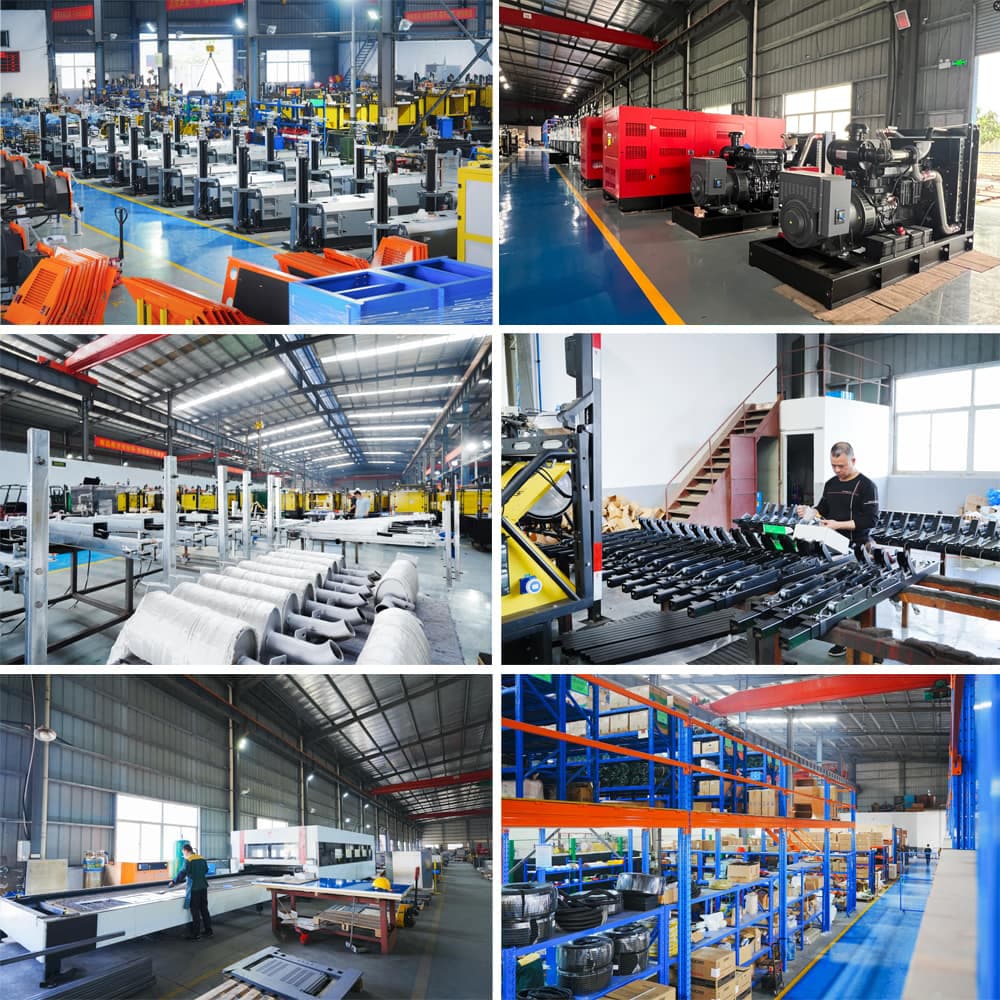
LEHUI (Fuzhou) Intelligent Equipment Manufacturing Co., Ltd. manufactures diesel generator sets, mobile light towers, hybrid power systems, and customized industrial equipment for different power applications.
For mining projects, LEHUI can provide generator options across different power capacities, engine configurations, and enclosure designs. Its product range includes mining-oriented generator models, industrial generator sets, and large-capacity containerized systems.
Whether the project involves a remote exploration camp, a temporary mining facility, a pump station, a mineral processing plant, or a large industrial power installation, the generator configuration should be selected based on the actual load and operating environment.
LEHUI's technical team can assist buyers with power capacity selection, engine configuration, enclosure requirements, and project-specific equipment options.
Contact LEHUI to discuss your mining power requirements and request a generator quotation.
Frequently Asked Questions About Mining Diesel Generators
What size diesel generator is required for a mining site?
Generator capacity depends on the total operating load, motor starting demand, power factor, duty cycle, site conditions, and redundancy requirements. Small camps may use tens of kVA, while processing facilities may require hundreds or thousands of kVA. A load assessment is necessary before selecting a model.
Are diesel generators suitable for remote mining operations?
Yes. Diesel generator sets are widely used at remote mining sites where grid power is unavailable or unreliable. They can supply primary power to equipment, workshops, accommodation, pumps, lighting, and other site loads when configured for the required duty.
What is the difference between prime power and standby power for mining generators?
Prime power is intended for applications where the generator supplies power for extended operation under varying loads within its rating conditions. Standby power is intended for emergency backup during utility outages. The two ratings are not interchangeable.
How much fuel does a mining diesel generator consume?
Fuel consumption depends on generator size, engine model, load percentage, operating conditions, and maintenance. For example, LEHUI lists 17.6 L/h at 100% load for its 80kVA mining generator. Actual consumption at a mining site may differ.
Can diesel generators operate in dusty mining environments?
Yes, provided the generator is configured appropriately for the environmental conditions. Air filtration, enclosure design, cooling airflow, filter inspection, and preventive maintenance are important in dust-heavy locations.
Can multiple diesel generators operate in parallel at a mining site?
Yes. Multiple generator sets can operate in parallel when equipped with compatible synchronization, protection, and load-sharing systems. This arrangement can provide flexibility, redundancy, and capacity management, but it requires proper electrical engineering.
Are containerized generators suitable for mining projects?
Containerized generator sets can be suitable for remote mining and large industrial projects where integrated enclosure, transport, weather protection, cooling, and service access are important. The configuration should be selected according to the site requirements.
Can solar power and batteries reduce diesel consumption at a mine?
They may reduce diesel consumption in suitable applications. Hybrid systems can combine solar generation, battery storage, and diesel generators to manage energy supply. The potential savings depend on solar conditions, load profile, battery capacity, system controls, and generator operating strategy.
What should I provide when requesting a mining generator quotation?
Provide the required kW or kVA, voltage, frequency, prime or standby application, operating hours, equipment list, motor starting details, site conditions, fuel requirements, enclosure preferences, and project location. This information helps the supplier recommend a suitable generator configuration.