1. The core value of the battery material mixer
High viscosity slurry production scenario: A certain battery power company produced NCM811 positive electrode slurry (viscosity 80,000 cP, solid content 65%), using a dual-planet mixer for continuous operation for 72 hours. The slurry uniformity deviation was stable within ±0.15%, and the final battery cycle life was increased by 25%, far superior to the ±0.5% deviation level of traditional single-axis mixing equipment.
Low-temperature operation scenario: In the winter workshop of the lithium battery material factory, the temperature drops as low as -12℃. The planetary vacuum mixer equipped with a heating jacket and an oil temperature control module can start normally without any additional modifications. The batch mixing repeatability reaches 98%, solving the industry pain point of unstable equipment operation in the arid regions of the northwest.
Nanomaterial dispersion scenario: A certain energy storage enterprise processed silicon-carbon negative electrode materials (particle size 50nm). Through the stepwise speed-up program of the high shear dispersion machine (precisely adjusted from 300 to 3000 rpm), while avoiding the destruction of the particle structure, the agglomerates were completely disintegrated. The porosity uniformity of the coated electrode sheet after the slurry coating was increased by 40%.
2. In-depth Comparison: Different Types of Blenders
Equipment type
Viscosity adaptation range
Core Strengths
Typical application scenarios
Limitations
Standard blender
000 cP
Low cost and simple operation
The adhesive was initially mixed with the solvent and then developed in the laboratory.
The mixing efficiency of high-viscosity materials is low and the uniformity is poor.
Planetary mixer
10,000-100,000 cP
Three-dimensional mixed without dead corners, supporting vacuum degassing
Pilot-scale / pilot-scale production, preparation of LFP positive electrode slurry
The production efficiency of the large-scale model is lower than that of the dual-planet model.
Double-planet mixer
>100,000 cP
Strong shear force, high solid content, good compatibility
Production of electric vehicle battery pastes, NCM high-energy-density batteries
The cost of equipment investment is relatively high.
The core reasons for the damage of the stirring shaft mainly lie in three aspects: Firstly, improper material selection. If carbon tungsten coating or Hastelloy material is not used when handling high-hardness powders (such as lithium iron phosphate), the shaft is likely to be worn out. It is recommended to prioritize choosing a stirring shaft with a surface hardness of ≥ HRC60; Secondly, excessive operation load. When the viscosity of the slurry suddenly exceeds the rated range of the equipment (for example, from 50,000 cP to 150,000 cP), not reducing the speed in time will cause the shaft to twist. An intelligent overload protection system (automatically stops when the torque exceeds the rated value by 120%) needs to be equipped; Thirdly, lack of maintenance. Insufficient bearing lubrication or aging of the seals allows the material to seep in, accelerating the corrosion of the shaft. It is recommended to conduct a comprehensive maintenance every 500 hours of operation.
The differences in material properties between the two battery systems determine the direction of equipment selection: The NCM cathode slurry has a high viscosity (60,000 - 100,000 cP) and extremely high requirements for dispersion uniformity (deviation ≤ 0.2%), so a dual-planet mixer with variable frequency speed control (50 - 500 rpm) and vacuum degassing function (vacuum degree ≤ -0.095 MPa) should be selected to avoid slurry agglomeration that affects battery energy density; The LFP cathode slurry has a high solid content (65% - 70%) and poor fluidity. It is recommended to use a planetary mixer with a scraping wall device, with a scraping gap ≤ 0.5mm, to prevent material sticking to the wall and resulting in uneven mixing, and also to be equipped with a heating module (temperature control range 20 - 80℃) to accelerate slurry maturation.
The key to achieving balance lies in "precisely matching the process requirements": In the small-scale trial stage (batch volume of 5-20L), a small planetary mixer with a power of 3-5kW can be selected, with an energy consumption of approximately 8-12 degrees per batch, which meets the flexibility for research and development; in the pilot-scale stage (50-100L), a variable-frequency controlled dual-planetary model is recommended, with a power of 15-22kW. Through stepwise speed regulation (low-speed mixing, high-speed dispersion), the energy consumption is controlled at 25-35 degrees per batch; in the mass production stage (200-500L), a large dual-planetary mixer driven by two motors is suggested, with a power of 45-75kW, equipped with a waste heat recovery system, which can reduce energy consumption by 10%-15%, and at the same time, through a continuous feeding design, the production capacity can be increased, with each hour capable of processing 300-500kg of slurry.
In the context of the explosive growth of the new energy industry, the battery material mixer has become the “core equipment” that determines the performance of batteries. The following real scenarios visually present the key role of the equipment:
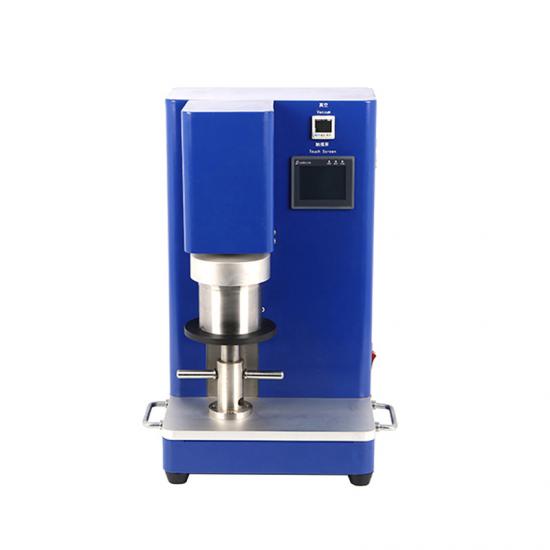
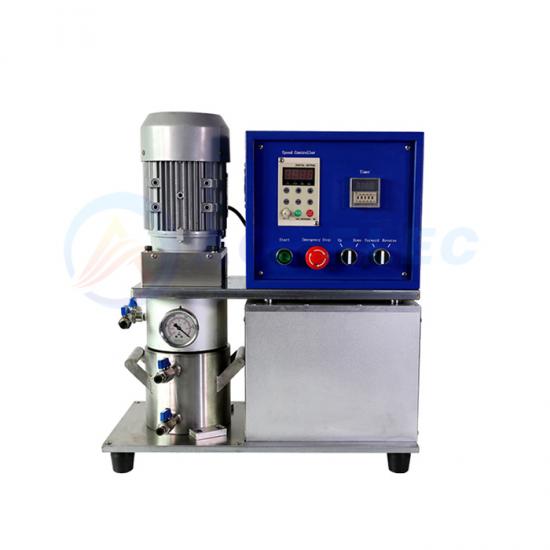
The key lies in the requirement of the slurry for the amount of bubbles: If it is for the production of power batteries (especially cylindrical batteries and pouch batteries), the slurry's bubble content must be ≤ 0.3%, otherwise it will cause pinholes in the electrode sheet and an increase in battery internal resistance. In such cases, a vacuum type mixer (with a vacuum degree of ≤ -0.09 MPa) must be selected, along with a bubble elimination paddle design, which can control the bubble content within 0.1%. If it is used for energy storage batteries, low-speed electric vehicle batteries, etc., where the consistency requirements are lower, the slurry's bubble content is allowed to be ≤ 1%, a normal pressure type mixer can be chosen. The equipment cost can be reduced by 30%-40%, and the operation process can be simplified. In addition, when dealing with oxidizable materials (such as silicon-carbon negative electrodes, metal lithium slurry), the vacuum type mixer can introduce nitrogen to protect the material, avoiding material deterioration.