LiFePO4 batteries have become a popular choice for residential solar energy storage, off-grid power systems, and commercial energy storage projects. Their long cycle life, stable chemistry, and high usable capacity make them suitable for applications that require dependable energy over many years.
However, choosing a good battery is only part of the job. How it is stored, charged, inspected, and maintained also affects its service life and operating reliability. This becomes particularly important for solar distributors, system integrators, and installers who need to manage battery inventory or maintain multiple energy storage installations.
Whether you are storing a spare battery before installation or maintaining an operating solar system, understanding the correct procedures can help prevent unnecessary battery degradation and avoidable safety risks.
Here is a practical guide to storing and maintaining LiFePO4 batteries safely.
1. Choose the Right Storage Environment for LiFePO4 Batteries
Temperature and humidity are two important factors when storing a lithium solar battery. Although LiFePO4 chemistry offers good thermal stability, prolonged exposure to unsuitable environmental conditions can affect battery performance and service life.
For long-term storage, keep batteries in a clean, dry, and well-ventilated indoor environment. Avoid locations exposed to direct sunlight, rain, excessive humidity, or extreme temperature fluctuations.
Here are some practical storage recommendations:
- Temperature: Follow the battery manufacturer's specified storage temperature range. A moderate, stable indoor environment is generally preferable to repeated exposure to extreme heat or cold.
- Humidity: Keep the battery away from standing water, condensation, and damp environments.
- Ventilation: Maintain sufficient space around battery units and avoid enclosing them in unsuitable airtight storage spaces.
- Sunlight: Do not leave batteries exposed to direct sunlight or near heat-producing equipment.
- Physical protection: Store batteries where they cannot be struck, crushed, dropped, or accidentally damaged.
For example, Homenergon's 25.6V 200Ah LiFePO4 battery specifies a storage temperature range of -40°C to 70°C. This is the manufacturer's stated allowable storage range, not a recommendation to keep batteries continuously at either extreme. A stable, moderate environment is a better choice for routine storage.
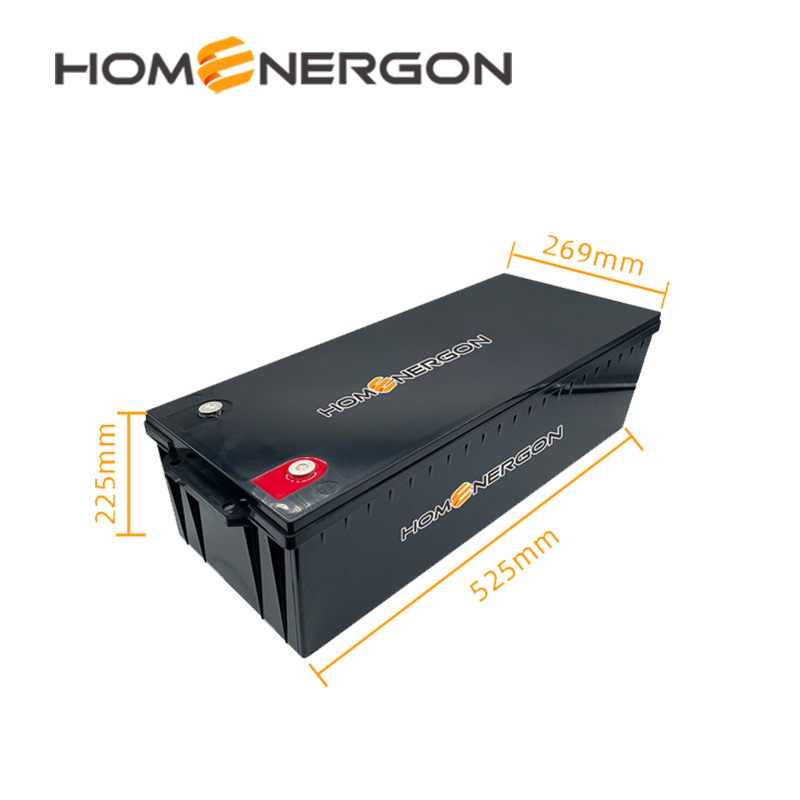
Homenergon 25.6V 200Ah LiFePO4 battery pack for solar energy storage applications.
2. Maintain the Correct Battery State of Charge During Storage
One common mistake is leaving a LiFePO4 battery fully charged for an extended period without checking its condition. Although lithium iron phosphate batteries have relatively low self-discharge rates, their charge level can gradually decrease during storage.
For long-term storage, follow the battery manufacturer's recommended state of charge (SOC). Some manufacturers specify partial charge levels, often around 30%–50%, for storage. However, the correct target depends on the battery design and product instructions, so do not apply one percentage to every battery model.
A few important practices can help:
- Check the manufacturer's recommended storage SOC before putting a battery into storage.
- Disconnect unnecessary loads and prevent parasitic power consumption.
- Check the battery voltage or SOC at the recommended maintenance interval.
- Recharge the battery when necessary using a compatible charger and the specified charging profile.
- Avoid allowing the battery to remain deeply discharged for an extended period.
For batteries with a long storage period, a scheduled inspection every three to six months can be a useful starting point, unless the manufacturer specifies a different interval.
Homenergon's published 25.6V 200Ah battery specifications indicate a self-discharge rate of approximately 2% per month. Actual storage performance can vary with temperature, battery condition, and the BMS's standby consumption.
3. Understand the Role of the Battery Management System (BMS)
The Battery Management System is an essential part of a modern LiFePO4 battery pack. It monitors battery operating conditions and provides protection against certain electrical and temperature-related risks.
Depending on the battery design, BMS protection functions may include:
- Overcharge protection
- Over-discharge protection
- Overcurrent protection
- Short-circuit protection
- High-temperature protection
- Cell voltage monitoring and balancing
For solar energy storage projects, BMS compatibility is especially important. The battery must communicate and operate correctly with the inverter or energy management system when communication functions are required.
Before installation, confirm that the inverter supports the battery's voltage range, charging parameters, discharge current, and communication protocol. CAN and RS485 are commonly used communication interfaces, but their availability and compatibility depend on the specific equipment.
It is also important to understand that a BMS is not a substitute for proper installation, external electrical protection, or routine inspection. Never bypass BMS protection or modify battery wiring without authorization from the manufacturer.
4. Follow the Correct Charging and Discharging Procedures
Charging conditions have a direct influence on battery performance. Using an incompatible charger or incorrect voltage settings can cause charging problems and may activate BMS protection.
When maintaining a solar battery storage system, pay attention to the following points:
Use a compatible charger. The charging voltage and current must match the battery manufacturer's specifications. Avoid using chargers designed for different battery chemistries unless they have an approved LiFePO4 charging profile.
Observe temperature limits. Charging temperature limits are different from discharge limits. For example, Homenergon's 25.6V 200Ah battery specifies a charging temperature range of 0°C to 60°C. Do not charge this model outside the specified range.
Avoid excessive charging current. The charging current should remain within the battery's rated and recommended limits. A higher current does not necessarily mean faster or better charging.
Avoid prolonged over-discharge. Deep discharge beyond the manufacturer's permitted limits can affect battery performance and may trigger BMS shutdown.
Use suitable inverter settings. Incorrect absorption, float, or low-voltage disconnect settings may affect battery operation. Configure these parameters according to the battery manufacturer's instructions.
For installers and system integrators, checking the charging profile during commissioning is an important step. It helps reduce compatibility problems before the system is handed over to the customer.
5. Inspect the Battery Pack Regularly
Routine inspection helps identify potential problems before they develop into more serious failures. Even when a battery is operating normally, its external condition, electrical connections, and surrounding installation environment should be checked periodically.
A practical maintenance checklist includes:
| Inspection Item | What to Check |
|---|---|
| Battery enclosure | Cracks, deformation, corrosion, or physical damage |
| Electrical terminals | Loose connections, corrosion, and signs of overheating |
| Battery temperature | Unusual heat during normal operation |
| BMS status | Protection alarms, abnormal voltage readings, and communication errors |
| SOC and voltage | Unexpected charge loss or abnormal voltage changes |
| Installation area | Moisture, dust accumulation, blocked ventilation, and nearby heat sources |
If a battery shows swelling, leakage, unusual odor, smoke, or excessive heat, stop using it if this can be done safely. Keep people away, follow the site's emergency procedures, and contact the manufacturer or qualified service personnel. Do not open or attempt to repair a damaged battery pack yourself.
6. Store and Handle Multiple Battery Packs Correctly
For solar distributors, wholesalers, and installation companies, battery storage management involves more than looking after one battery. Multiple units may be stored in a warehouse before shipment or installation, making proper inventory and handling procedures important.
Consider the following practices when managing battery inventory:
- Keep batteries in their original packaging where practical and follow the manufacturer's stacking instructions.
- Protect terminals against accidental contact with conductive objects.
- Keep batteries away from flammable materials and unauthorized access.
- Do not place heavy equipment or materials on battery packaging.
- Separate damaged or abnormal battery units from normal inventory and follow applicable hazardous goods procedures.
- Record model numbers, manufacturing dates, storage dates, and inspection results.
- Follow applicable local fire codes, electrical regulations, and battery transportation requirements.
When installing multiple batteries in parallel or series, make sure the battery models and connection arrangements are approved by the manufacturer. Battery packs should not be mixed randomly based on voltage alone. Differences in age, capacity, SOC, and internal resistance can create operating problems.
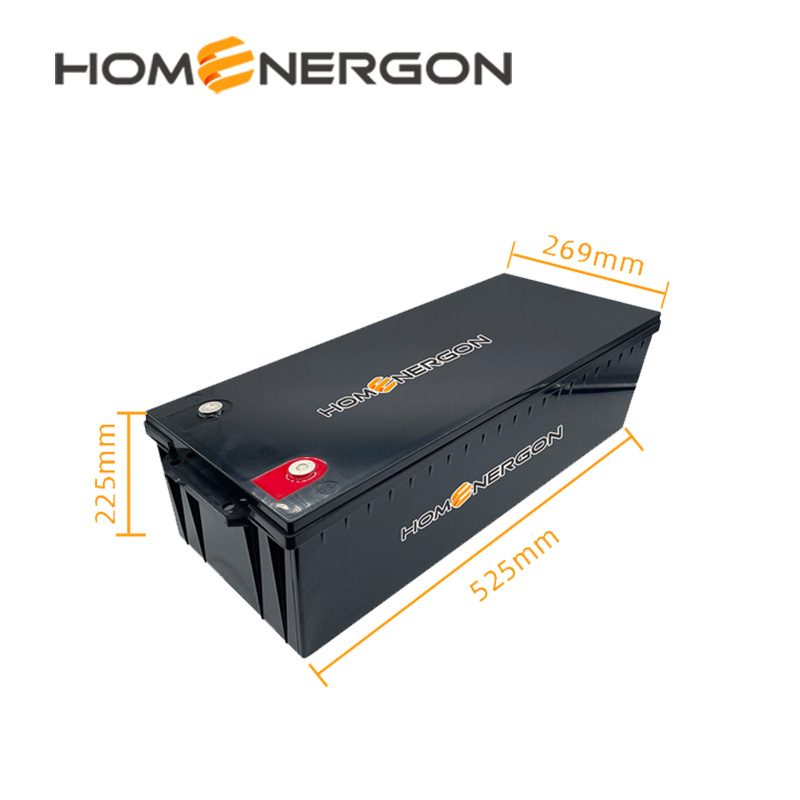
51.2V 100Ah LiFePO4 battery for residential and solar energy storage applications.
7. How to Extend the Service Life of a LiFePO4 Battery
LiFePO4 batteries are designed for repeated charging and discharging, but their actual service life depends on operating conditions and maintenance practices.
For long-term performance, consider these recommendations:
- Maintain suitable operating temperatures: Avoid prolonged exposure to excessive heat or operation outside the specified temperature range.
- Use recommended charging settings: Follow the manufacturer's voltage and current limits.
- Avoid unnecessary deep discharge: Configure the system to prevent repeated discharge beyond the recommended DoD.
- Monitor battery performance: Review SOC, voltage, temperature, and BMS alarms when the system supports monitoring.
- Keep connections in good condition: Check electrical connections according to the installation and maintenance schedule.
- Use compatible equipment: Ensure the inverter, charger, and battery management functions work together correctly.
For example, Homenergon's 25.6V 200Ah battery specifies a cycle life of more than 4,000 cycles at 1C and 80% DoD under the stated test conditions. This figure is a product specification, not a guarantee of identical service life under every installation condition.
For project buyers comparing battery options, it is worth evaluating cycle-life test conditions, warranty terms, BMS functions, and usable energy rather than relying on cycle-life numbers alone.
Explore Homenergon's LiFePO4 battery packs to compare different voltage and capacity configurations for solar energy storage projects.
8. Frequently Asked Questions About LiFePO4 Battery Storage and Maintenance
Q1: Can LiFePO4 batteries be stored fully charged?
They can be charged fully when required for normal operation, but long-term storage should follow the manufacturer's recommended SOC. Some manufacturers recommend partial charge rather than keeping batteries at 100% for extended periods. Check the specific product manual before storage.
Q2: How long can a LiFePO4 battery be stored without use?
The storage period depends on battery design, initial SOC, temperature, and standby consumption. Many batteries can remain unused for several months when stored correctly. However, periodic SOC checks and maintenance charging may be necessary to prevent excessive discharge.
Q3: Do LiFePO4 batteries need regular maintenance?
LiFePO4 batteries generally require less routine maintenance than traditional lead-acid batteries. They do not require electrolyte refilling. However, regular inspections of battery connections, enclosure condition, temperature, and BMS status are still recommended.
Q4: Can LiFePO4 batteries be stored in a hot warehouse?
Storage outside the recommended environmental conditions should be avoided. High temperatures over extended periods can accelerate battery aging. Choose a stable, shaded, dry, and ventilated storage area within the manufacturer's specified temperature range.
Q5: Can I connect different LiFePO4 battery packs together?
Not all battery packs can be connected in series or parallel. Voltage, capacity, BMS design, firmware, communication protocol, and manufacturer-approved connection limits must be considered. Always confirm compatibility before expanding a battery storage system.
Q6: Is it safe to leave a LiFePO4 battery connected to a solar system?
Yes, when the system is correctly designed and installed with compatible charging controls, BMS protection, and appropriate electrical safety devices. Regular system monitoring is still important, particularly in installations operating without daily supervision.
Q7: What should I do if a LiFePO4 battery becomes swollen or unusually hot?
Stop using the battery if it is safe to do so, keep people away, and follow the manufacturer's emergency procedures. Do not charge, open, puncture, or attempt to repair the battery. Contact qualified service personnel or the manufacturer for further instructions.
Keep Your Solar Battery Storage System Reliable
Proper LiFePO4 battery storage and maintenance do not require complicated procedures, but they do require consistency. Choosing a suitable storage environment, maintaining the recommended SOC, following correct charging parameters, and checking battery condition regularly can all help support long-term performance.
For solar distributors, installers, and project developers, these practices are also important for managing inventory, reducing avoidable maintenance costs, and delivering reliable energy storage solutions to customers.
Homenergon provides LiFePO4 battery packs and integrated solar energy storage solutions for residential, off-grid, and commercial applications. Contact our team to discuss battery specifications, system compatibility, and energy storage requirements for your next project.