When comparing a solar battery with a portable power station, the right choice depends on where the power is needed and how long the equipment must run. A household that wants to store daytime solar generation for evening use has different requirements from a camper who needs to charge devices at a campsite. Although both products store electricity, they are designed around different power needs.
A LiFePO4 solar battery is typically part of a fixed energy storage system connected to a compatible inverter and, where applicable, solar panels. A portable power station combines a battery, power electronics and output ports in a compact unit that can be moved between locations. Understanding this difference helps homeowners, solar installers, distributors and project buyers choose equipment that fits the application.
1. What Is a LiFePO4 Solar Battery?
A LiFePO4 solar battery uses lithium iron phosphate battery chemistry to store electrical energy. In a residential solar installation, it works with compatible power conversion equipment to store surplus electricity generated by solar panels and supply energy when solar production is low. Depending on the system design, stored energy may support evening consumption, selected backup loads or broader household energy management.
Unlike a complete portable power station, a battery pack is not necessarily a standalone power supply. Buyers need to confirm the required inverter, battery management system (BMS), communication protocol, voltage range and installation accessories. Battery capacity alone does not determine whether a system can operate a particular appliance.
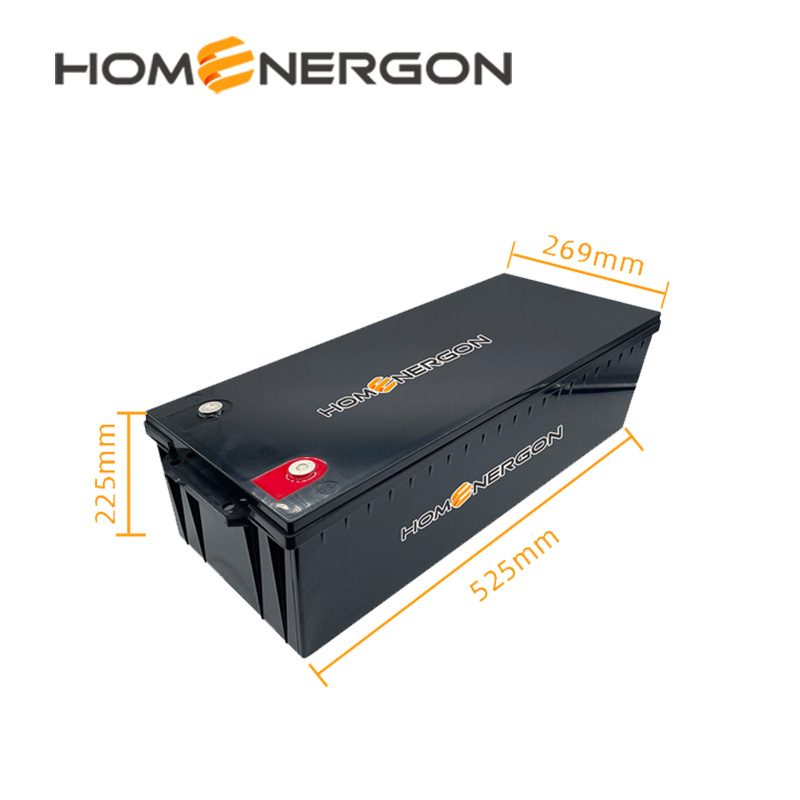
Homenergon 51.2V 100Ah LiFePO4 battery pack
For example, Homenergon's 51.2V 100Ah battery pack has a nominal energy capacity of 5.12kWh. Its product specifications list a 100A continuous discharge current and a cycle life of more than 4,000 cycles under the stated test conditions. These figures are useful starting points, but buyers should also check system compatibility, usable capacity, operating conditions and the warranty terms for their application.
2. What Is a Portable Power Station?
A portable power station is an integrated battery-powered unit designed to supply electricity without requiring a permanent installation. Depending on the model, it may provide AC outlets, USB ports, DC outputs and solar charging input. This makes it useful for camping, mobile work, outdoor events, travel and selected emergency loads at home.
Its main advantage is convenience. Users can charge the unit from a wall outlet, a compatible solar panel or another supported source, then move it where power is needed. Most models are intended for selected devices rather than supplying an entire property through a home's electrical distribution system.

Homenergon Mars portable power station series
Homenergon's Mars330 portable power station, for example, has a listed battery capacity of 288Wh and a rated continuous AC output of 330W. It supports charging through an AC adapter, a compatible solar panel or a car port. This type of product is designed for smaller loads and portable use; it should not be treated as equivalent to a multi-kilowatt-hour home storage system.
3. Solar Battery vs. Portable Power Station: Key Differences
| Comparison | LiFePO4 Solar Battery | Portable Power Station |
|---|---|---|
| Main purpose | Fixed energy storage for a compatible solar or backup system | Portable electricity for selected devices |
| Installation | Usually requires system integration and compatible equipment | Generally ready to use after charging |
| Capacity options | Can be selected or expanded according to system design | Limited by the model's integrated battery capacity |
| Power output | Depends on the compatible inverter and battery limits | Limited by the unit's rated output and port specifications |
| Typical use | Home energy storage, solar self-consumption and designed backup systems | Camping, mobile work, travel and small emergency loads |
| Portability | Usually installed in a designated location | Designed to move between locations |
The distinction is not simply battery chemistry or capacity. A portable power station is a complete power supply in one enclosure, while a solar battery is generally one component in a larger energy system. Some portable stations also use LiFePO4 cells, so the two product types should not be compared on chemistry alone.
4. When Is a Solar Battery the Better Choice?
A fixed solar battery is worth considering when the goal is to store solar energy for regular use at home or at a small business. Instead of relying only on electricity generated at the moment, a properly designed storage system can shift some of that energy to a later time.
- Daily solar energy use: Store surplus daytime generation for evening or other periods of lower solar production.
- Planned backup power: Supply selected circuits during a grid outage when the system is designed and configured for backup operation.
- Higher energy requirements: Select storage capacity and inverter output based on household demand and the equipment that needs to run.
- Long-term installation: Integrate the battery with compatible solar panels, an inverter and the site's electrical system.
Capacity planning matters. Review daily electricity consumption, the loads that must remain powered, the expected backup duration and the amount of solar energy available for charging. Also confirm whether the inverter supports the intended battery voltage, communication protocol and charging limits.
Buyers planning a complete installation can review Homenergon's residential solar systems to compare integrated options for household energy storage.
5. When Is a Portable Power Station the Better Choice?
A portable power station is often the more practical choice when electricity is needed in different places or when a permanent installation is unnecessary. It can power compatible electronics and appliances within its capacity and output limits, making it suitable for many short-duration and mobile applications.
- Camping and travel: Charge phones, cameras, laptops and other compatible devices.
- Outdoor work: Supply power to low-wattage tools or electronic equipment within the station's rated output.
- Temporary backup: Keep selected small devices running during a short outage, provided their power requirements are compatible.
- Flexible deployment: Move the unit between a vehicle, worksite, campsite or home as needed.
Before choosing a model, check both energy capacity in watt-hours (Wh) and continuous output in watts (W). A device may have enough stored energy for several hours but still exceed the station's maximum output when switched on. Also consider surge requirements, port types, solar input limits, charging time and the weight of the unit.
For portable applications, explore the portable power station range and compare the available models against the devices you intend to operate.
6. How to Estimate the Capacity You Need
Start by listing the devices you want to power, their wattage and the number of hours they will operate. A simple estimate is:
Energy required (Wh) = Device power (W) × Operating time (hours)
For example, a 60W device running for five hours uses about 300Wh before conversion losses and other system factors. A 288Wh portable power station would not be expected to supply that load for the full five hours because the required energy already exceeds its nominal battery capacity.
For a home storage system, estimate daily energy use in kilowatt-hours (kWh), identify essential loads and decide how many hours or days of backup are required. Usable battery energy will be lower than or otherwise differ from nominal capacity depending on the permitted depth of discharge, conversion efficiency, system settings and operating conditions.
Also separate energy capacity from power output. Kilowatt-hours indicate how much energy can be stored; kilowatts indicate how much power a system can deliver at a given time. Both values must suit the intended application.
7. Consider Total Cost, Compatibility and Maintenance
The initial purchase price is only one part of the decision. A fixed solar battery project may require an inverter, electrical protection, mounting hardware, installation and commissioning. A portable power station typically combines the battery and inverter functions in one unit, although compatible solar panels or additional accessories may be purchased separately.
For either option, review the warranty, cycle-life conditions, temperature limits, charging requirements and availability of technical support. For a fixed battery, check system communication and inverter compatibility before placing an order. For a portable station, verify output voltage, plug type, rated power and charging input for the destination market.

Integrated hybrid solar and battery storage system
For example, Homenergon lists an ID10.0-Max hybrid solar system with approximately 40.7kWh of battery storage and a 10kW rated system configuration. It illustrates the difference between a fixed energy storage solution and a small portable power station. The exact system design, usable capacity, output limits and local compliance requirements should always be confirmed for the project.
To learn more about the supplier and its product range, visit Homenergon.
Frequently Asked Questions
1. Is a LiFePO4 solar battery the same as a portable power station?
No. A LiFePO4 solar battery is generally a battery pack designed to work with compatible system components. A portable power station is an integrated unit that typically includes a battery, inverter and multiple output ports. Some portable power stations also use LiFePO4 chemistry.
2. Can I use a portable power station to run my whole house?
Most portable power stations are intended for selected devices rather than whole-home power. Whole-house or essential-circuit backup requires suitable output capacity, compatible electrical arrangements and, where needed, professionally installed transfer equipment. Check the manufacturer's instructions before connecting any unit to household wiring.
3. Is a LiFePO4 battery suitable for home battery storage?
LiFePO4 batteries are used in many residential energy storage systems. Suitability depends on the battery's specifications, compatible inverter, system controls, installation conditions and local requirements. Confirm the product's cycle-life test conditions and warranty rather than relying on chemistry alone.
4. Can a portable power station be charged with solar panels?
Many models accept solar charging, but the panel voltage, current, connector and maximum input power must fall within the station's specifications. Charging speed also depends on sunlight, panel orientation and operating conditions.
5. How much battery capacity do I need for home backup?
Estimate the energy consumption of the loads you want to keep running and the number of backup hours required. Then account for usable battery capacity, inverter efficiency, surge power and any system reserve. A qualified installer can help size the system against your home's electrical requirements.
6. Which option is better for solar installers and distributors?
It depends on the customer base. Solar batteries and integrated storage systems are relevant for residential energy projects, while portable power stations suit outdoor, mobile and small backup applications. Distributors should compare demand, product specifications, compliance, warranty support and the installation expertise available in their target market.
Conclusion
A solar battery and a portable power station solve different power problems. Choose a LiFePO4 solar battery when you need fixed energy storage that can work with a compatible solar and inverter system. Choose a portable power station when mobility, simple setup and power for selected devices matter most.
Before making a decision, compare usable capacity, rated output, charging options, compatibility and the loads you actually need to run. Homenergon offers both battery packs and portable power stations, along with residential solar storage solutions, so buyers can evaluate products according to the demands of each application.