1.What is a battery separator?
The battery separator is a core high-polymer porous film component inside lithium batteries, located between the positive and negative electrodes, with a thickness of only 4-20 microns. It is mainly made of polyethylene (PE), polypropylene (PP), or PP/PE composite materials as the base material, and is processed into a uniform microporous structure through wet phase separation or dry stretching techniques (the pore size is usually between 0.01 and 1 microns).
In terms of morphology, it is like an "ultra-thin porous filter", which not only has physical structural integrity and can maintain its shape stability during battery assembly and charge-discharge cycles, but also has a very high porosity (wet-process separators have a porosity of 40% - 45%, while dry-process separators are about 35% - 40%), providing channels for lithium ion transmission. It is worth noting that the micro-pore size deviation of high-quality separators needs to be controlled within 10%, and the weight per square meter is only 3 - 10 grams, achieving core functions without increasing the volume and weight burden of the battery.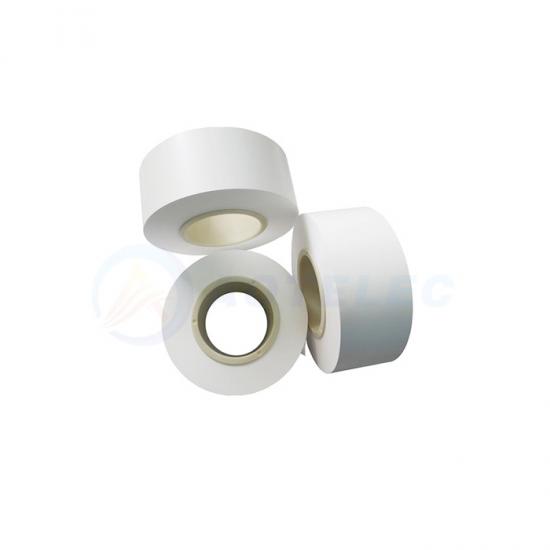
Although battery separators seem thin and light, they undertake the dual core missions of "safety protection + performance guarantee" for lithium batteries. These three functions are indispensable and directly determine the battery's service life, fast charging capability, and safety boundaries:
(1) Physical isolation: The "safety firewall" that prevents short circuits between the positive and negative electrodes
Direct contact between the positive electrode (such as ternary lithium, lithium iron phosphate) and the negative electrode (such as graphite) in lithium batteries can cause severe short circuits and even fires and explosions. Battery separators, through their continuous film structure, completely physically separate the positive and negative electrodes, preventing electrons from passing directly and avoiding short circuit risks from the root. This function is particularly crucial in extreme scenarios: for example, in the event of a collision in a new energy vehicle, high-quality separators can resist a puncture force of over 10N (wet-process separators have a puncture resistance strength of up to 12N), and even if the battery casing deforms, they can maintain structural integrity and prevent the positive and negative electrodes from coming into contact. During long-term storage or transportation of energy storage stations, the dimensional stability of the separator (thermal shrinkage rate < 3% at 120°C) can prevent membrane shrinkage and wrinkling caused by temperature changes, ensuring the continuous effectiveness of the isolation function.
(2) Ion conduction: The "energy channel" that guarantees the charge-discharge cycle
The essence of lithium battery charging and discharging is the back-and-forth migration of lithium ions between the positive and negative electrodes. The micro-pore structure of the battery separator provides a smooth transmission path for lithium ions - after the separator is soaked with electrolyte, lithium ions can quickly move between the positive and negative electrodes through the micro-pores, completing the charge transfer. The porosity and uniformity of the pore size of the separator directly affect the ion conduction efficiency: for example, the 42% ± 2% porosity wet-process separator used in Tesla's 4680 battery can increase the lithium ion conduction efficiency by 15%, supporting a 4C fast charging that can fully charge the battery in 15 minutes. Conversely, if the pore size deviation of the separator is too large (such as up to 20% for dry-process separators), it will lead to ion transmission obstruction, increase the battery's internal resistance by more than 5%, significantly reduce the fast charging speed, and even cause problems such as unbalanced charging and discharging and severe heating.
When lithium batteries experience abnormal temperature increases due to overcharging, short circuits, or high-temperature environments, the battery separator initiates "self-protection": PE material separators close their micro-pores through thermal shrinkage at 135°C ± 2°C, and PP material separators do so at 165°C ± 5°C, cutting off the lithium ion transmission path and terminating the battery's charge-discharge reaction to prevent further temperature rise and thermal runaway. This function is crucial in high-power devices such as energy storage stations and new energy vehicles - for example, the PP separators used in energy storage stations remain stable for 30 consecutive days at 60°C, and when the temperature unexpectedly rises to 165°C, they can quickly close the pores to block the current, preventing battery fires and explosions. In contrast, if the separator's thermal stability is insufficient (thermal shrinkage rate > 5%), micro-pore collapse or membrane fracture may occur at high temperatures, not only failing to close the pores but also potentially causing direct contact between the positive and negative electrodes, exacerbating safety risks. With technological advancements, modified separators (such as ceramic-coated and PVDF-coated separators) have added value beyond their core functions: Firstly, they enhance mechanical strength. Ceramic-coated separators have a 20% higher puncture resistance than ordinary separators, providing better protection against lithium dendrite penetration. Secondly, they improve electrolyte wettability. The contact angle of the coated separator with the electrolyte is less than 30°, further enhancing ionic conductivity. Thirdly, they improve thermal stability. Ceramic coatings (such as Al₂O₃ and SiO₂) can increase the temperature tolerance limit of the separator to over 200°C, expanding the operating temperature range of the battery to -40°C to 85°C, making them suitable for extreme application scenarios such as high cold and high heat.
The three major functions of battery separators have different weights in different application scenarios, directly determining the selection logic:
New energy vehicle power batteries: The core demands are "safety + fast charging", so wet-process separators are preferred - their strong isolation (puncture resistance of 10N+), high ion conduction efficiency (compatible with 4C fast charging), and reliable high-temperature pore closure function can meet the demands of high-speed driving and frequent fast charging of vehicles.
Energy storage power stations: The core demands are "safety + cost", dry-process PP separators have a higher high-temperature pore closure temperature (165°C), which is more suitable for the long-term high-temperature operation scenarios of energy storage batteries, and they also have a significant cost advantage, which can reduce the cost of large-scale energy storage systems.
Consumer electronics (mobile phones, laptops): The core demands are "lightness + thinness + cycle life", ultra-thin wet-process separators (5-7μm) can enhance battery energy density while ensuring isolation and ion conduction functions, supporting over 3000 cycles of use.