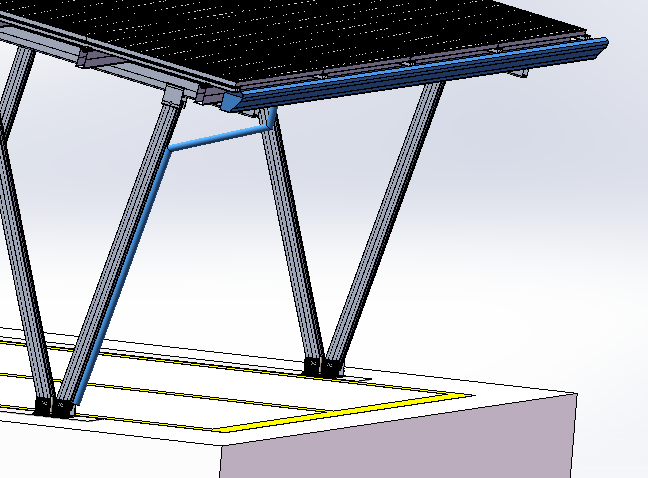
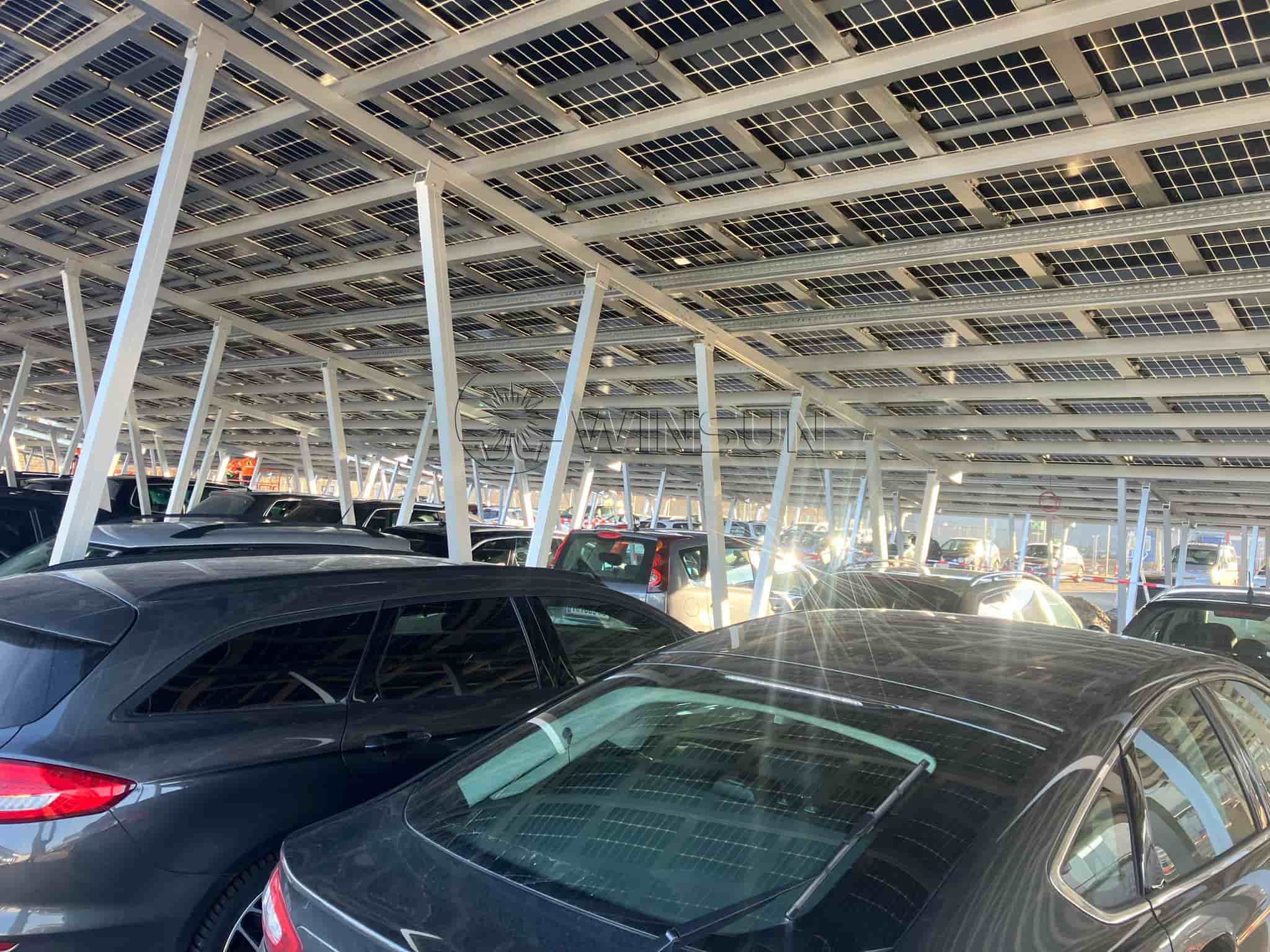
Unlock the Benefits of Photovoltaic Carports for Your Solar Projects

Have you ever considered how photovoltaic carports can revolutionize your solar energy initiatives? These innovative structures provide not just practicality but also significant sustainability benefits. Let’s explore the key advantages of integrating solar carports into your projects.

1. Environmental Benefits

Photovoltaic carports are essential for reducing carbon emissions. By harnessing solar energy, they align perfectly with our industry's sustainability goals, promoting clean and renewable energy. This transition is vital for a greener future.


2. Economic Advantages

From an economic perspective, these solar shade structures can lead to substantial savings on electricity bills. By selecting the right PV carport design, you can significantly reduce energy costs while benefiting from durable frameworks that ensure long-term performance. Our expertly engineered solutions are designed to maximize energy capture and efficiency, helping you make the most out of your investment.

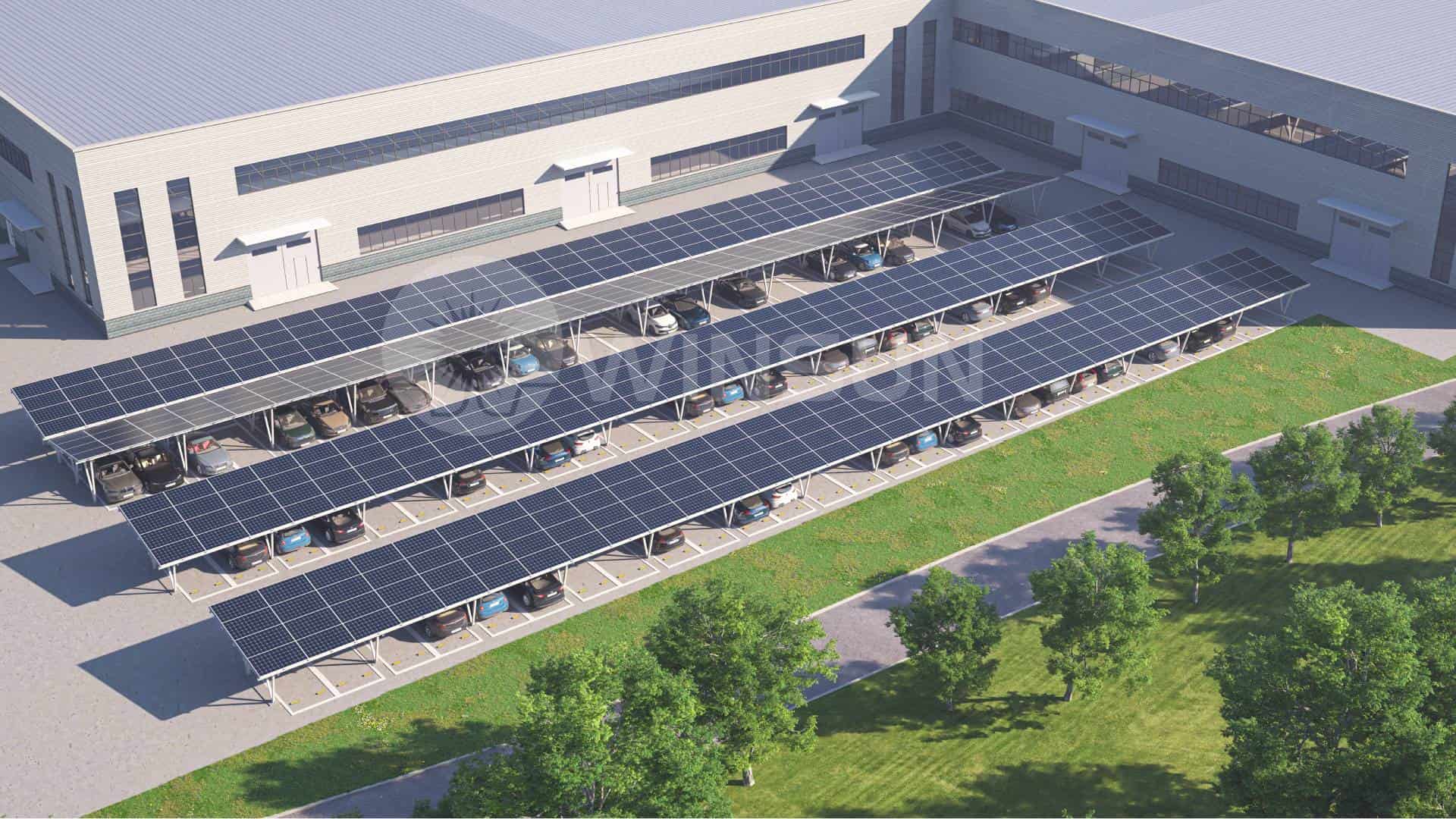
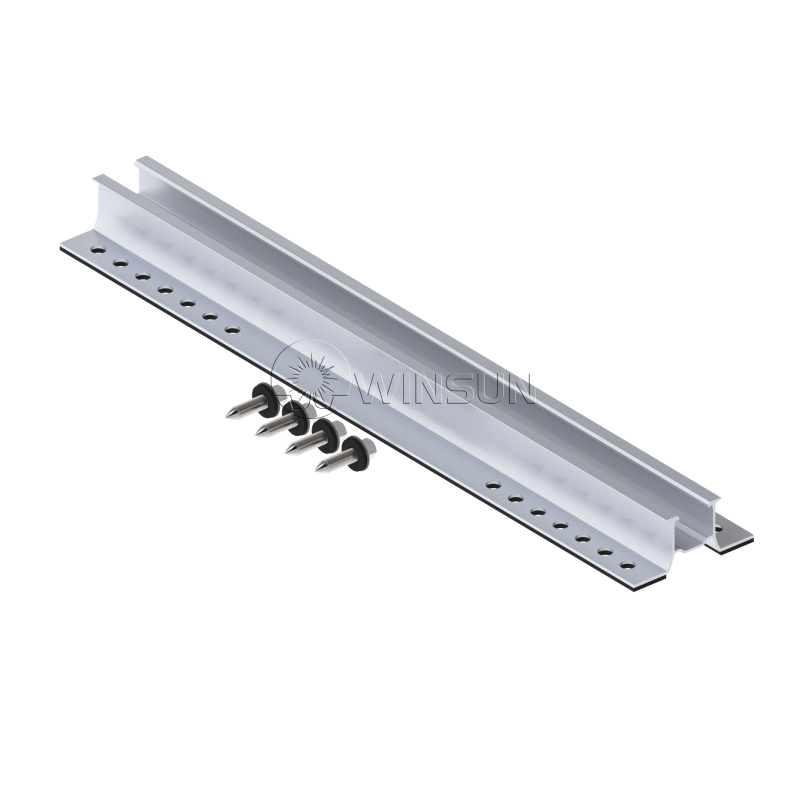
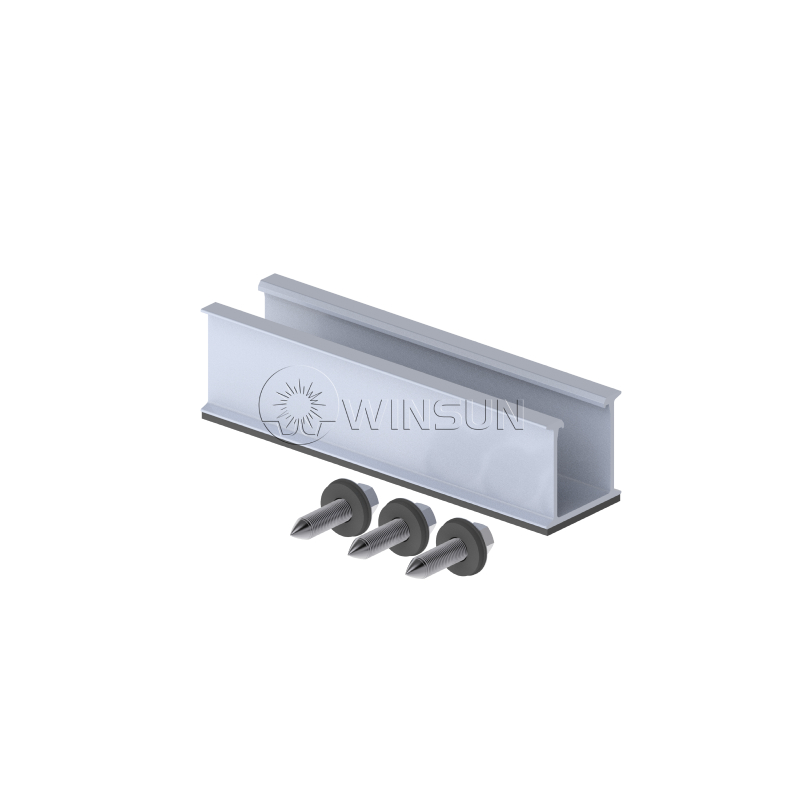
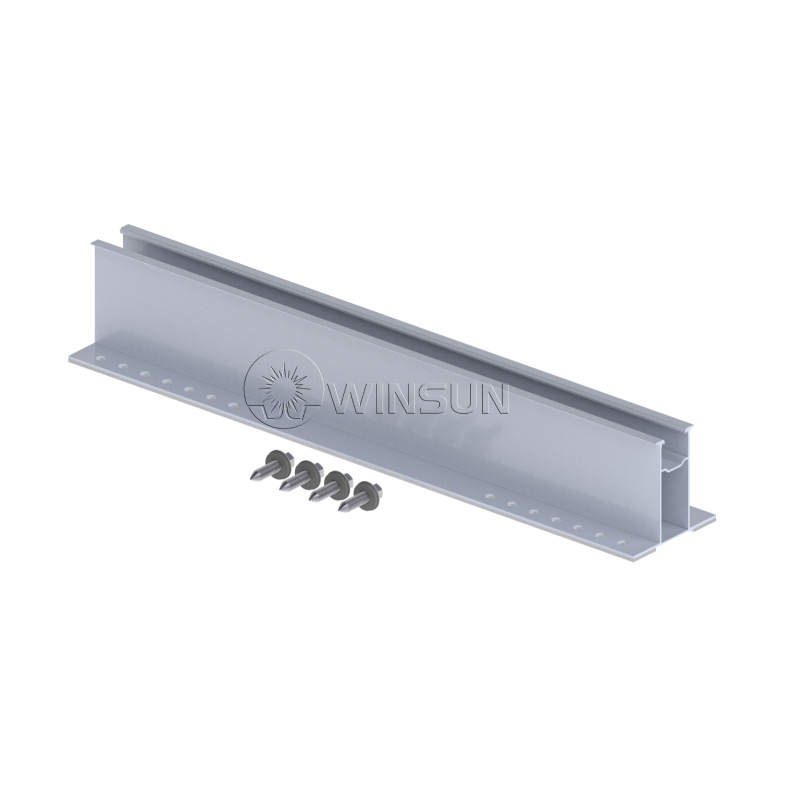
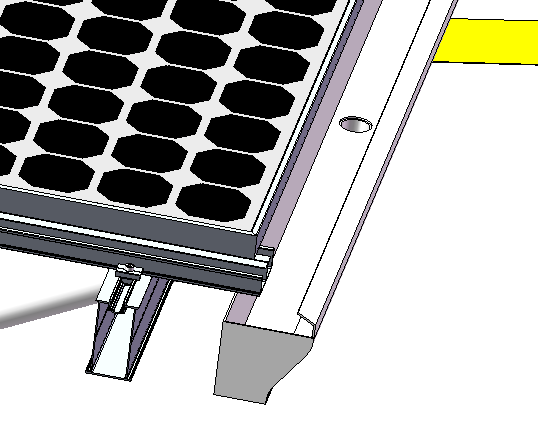
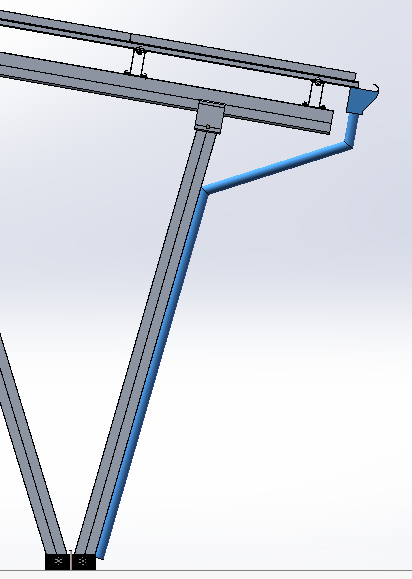
Winsun Carport Solar Mounting System

3. Multifunctionality

One standout feature of photovoltaic carports is their multifunctionality. They provide shade and protection for vehicles while generating clean energy. Additionally, combining these solar carports with charging stations offers a powerful solution for electric vehicles, enhancing the utility of parking areas and promoting sustainable transportation.


With their impressive benefits, PV carports are an ideal choice for both residential and commercial applications. If you’re interested in discovering how our structural solutions can elevate your solar projects, let’s connect!

Website: www.winsunsolar.com

Email: info@winsunsolar.com

What Makes Ballasted Solar Mounting Systems Ideal for Flat Roofs?

What Is a Ballasted Solar Racking System?

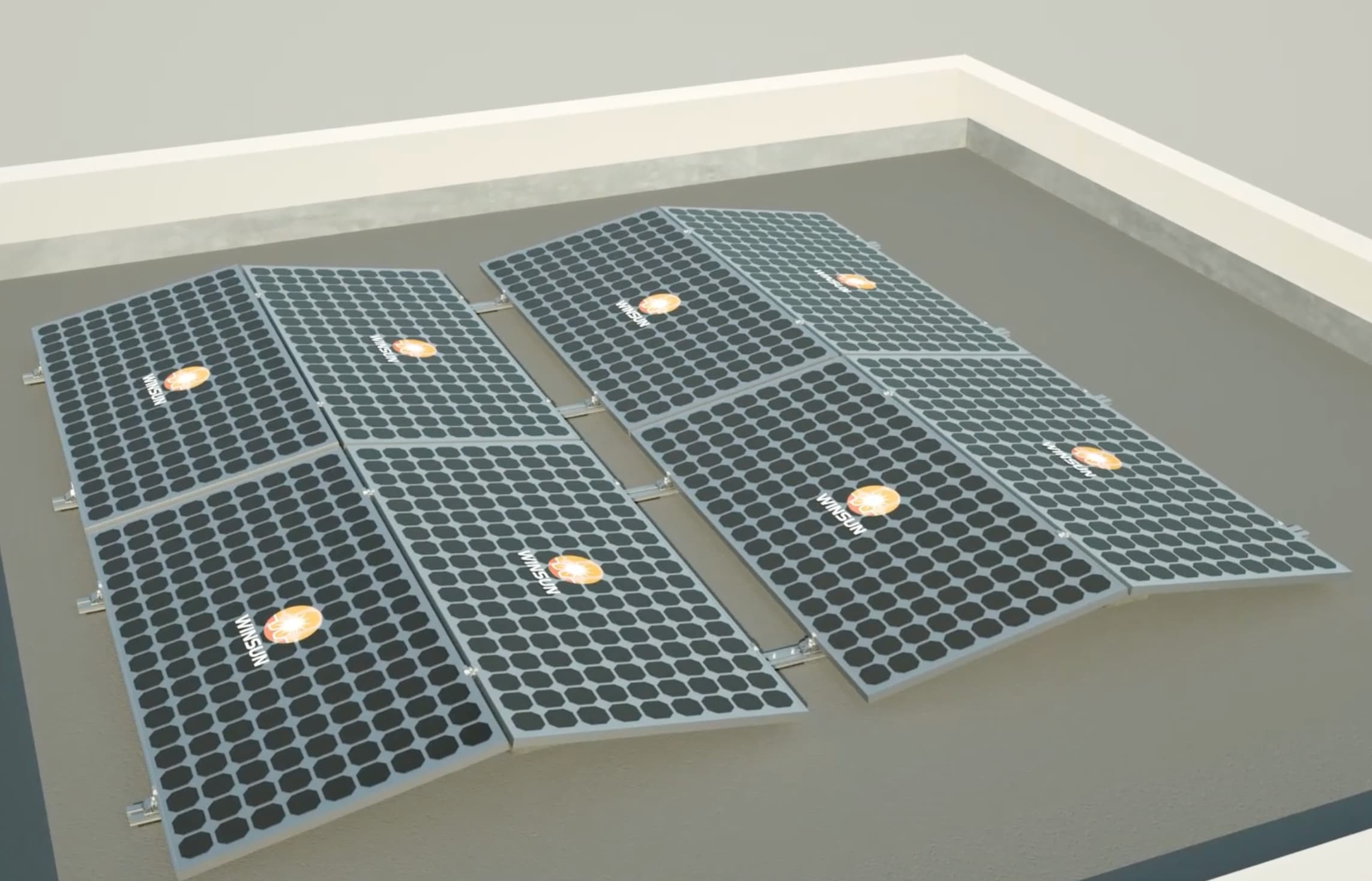
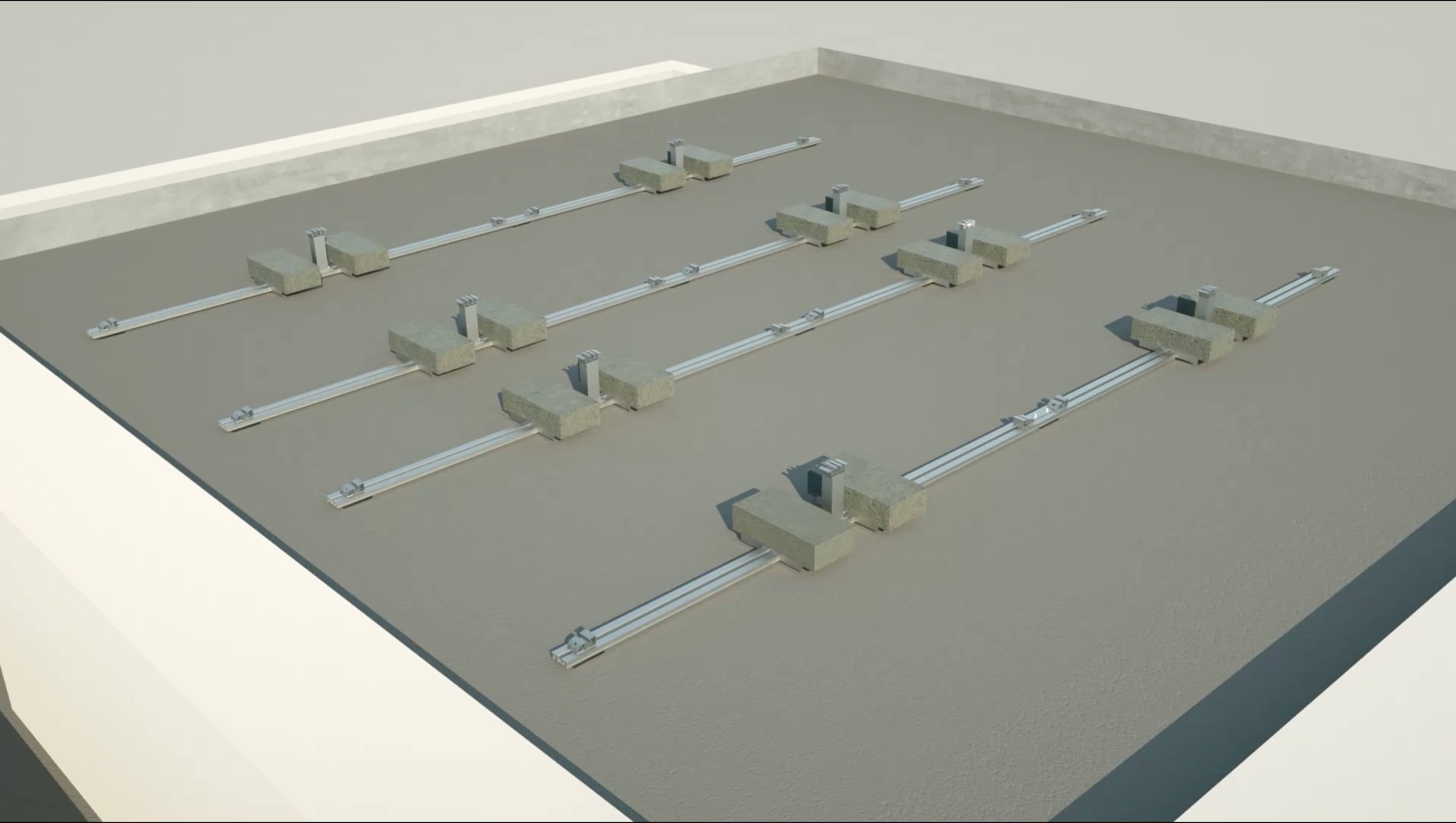
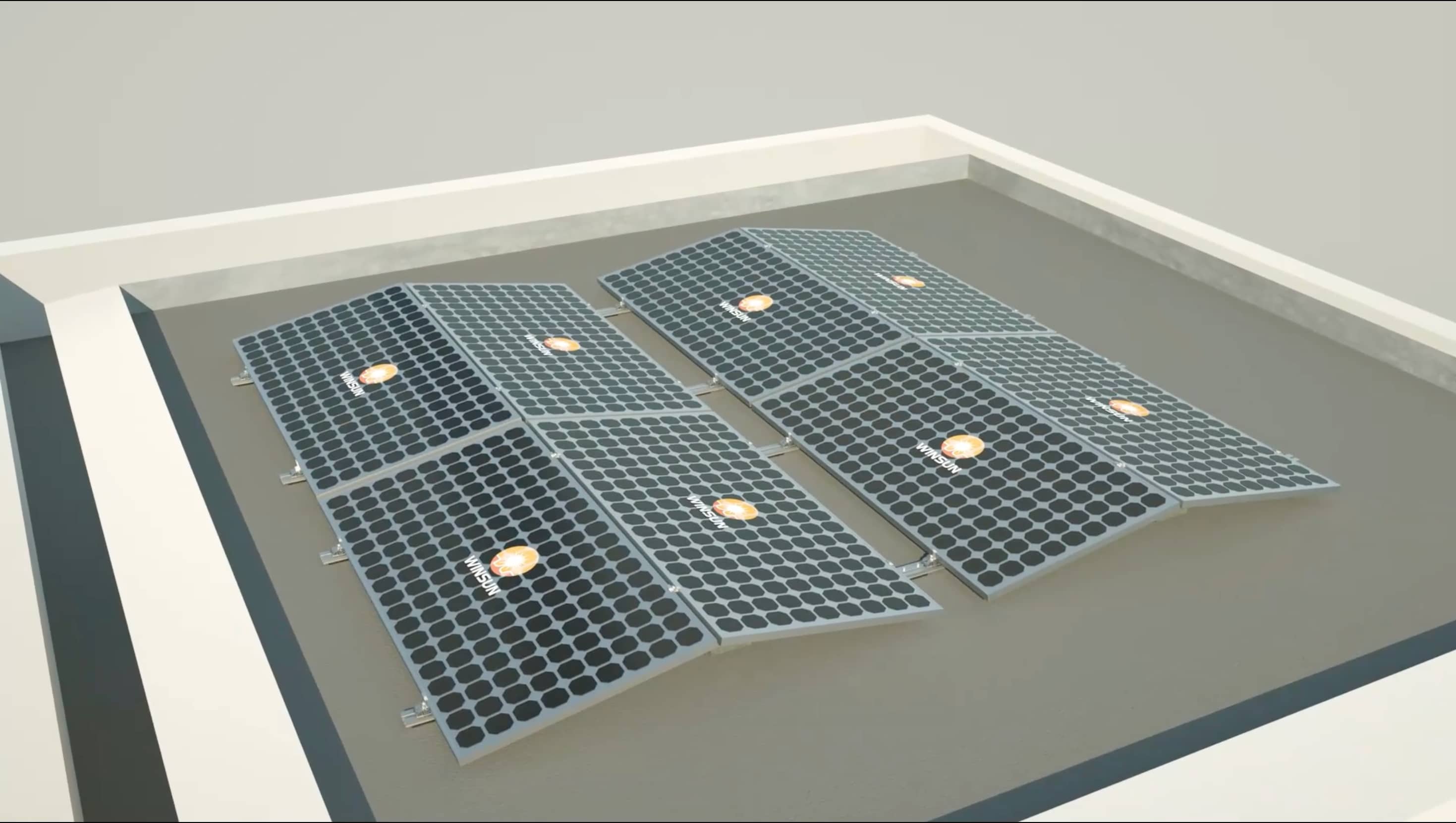
A ballasted solar mounting system is a popular solution for mounting solar panels without penetrating the roof. It secures the panels using ballast weights, such as concrete blocks, providing stability without the need for drilling or attaching the system to the surface. This makes it a preferred option for both flat roof solar installations.

Mounting Solar Panels On a Flat Roof

How Does a Ballast System Work in Solar Installations?

The ballast system works by distributing the weight across the racking structure, ensuring the solar panels remain secure even in harsh weather conditions. By using heavy materials like concrete blocks, it avoids penetrating roofs, which helps maintain the integrity of the structure and reduces the risk of leaks or damage. This method is particularly effective for commercial flat roof solar projects.

Solar Panel Flat Roof Tilt Mount Flat Roof Solar Mounting System


Solar Panel Mounting on Flat Roof


Key Advantages of Ballast Systems for Solar Projects

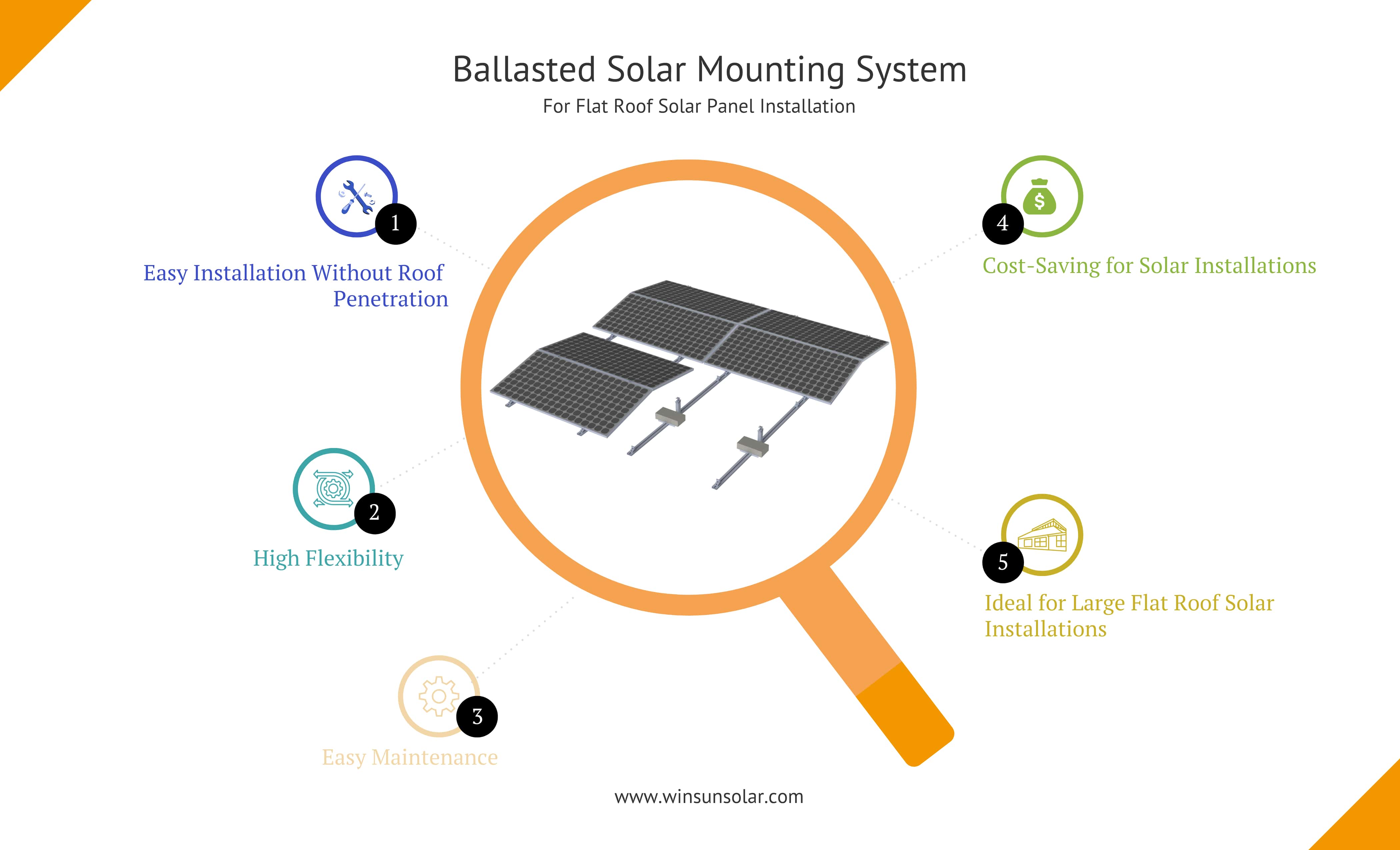
  1. Easy Installation Without Roof Penetration: One of the main advantages of ballasted solar racking systems is that they don't require drilling into the roof, which simplifies installation and avoids damage to the building.
  2. High Flexibility for Different Solar Projects: Ballast systems are adaptable to various environments, making them suitable for different types of solar installations on rooftops or the ground. This flexibility allows them to meet a wide range of project requirements.
  3. Easy Maintenance: With no fixed attachments, solar ballast systems are easy to adjust and maintain over time, helping to reduce the need for frequent repairs and lowering long-term costs.
  4. Cost-Saving for Solar Installations: By simplifying the installation process and reducing maintenance requirements, ballasted systems offer significant cost savings for large-scale solar projects.
  5. Ideal for Large Flat Roof Solar Installations: Ballast systems are particularly well-suited for large flat roof solar installations, allowing for maximum space utilization without compromising the roof structure.

Application Scenarios for Ballasted Racking Systems in Solar

Ballasted systems are widely used in commercial and industrial solar projects, as well as for ground-mounted solar arrays. These systems provide a practical, non-invasive solution for mounting solar panels while maintaining the integrity of the building or installation surface.

Interested in Learning More About Ballasted Racking Systems for Solar?

If you'd like to explore how ballasted racking systems can be the right fit for your next solar project, we’re here to answer any questions or discuss potential solutions. Feel free to reach out at your convenience.

WhatsApp :  +86 18805065452 / +86 15005991307

E-mail : info@winsunsolar.com

Integrated Base Station Monitoring System The Intelligent Guardian of Modern Telecom Networks

In the vast, invisible web of mobile communication networks, millions of base stations act as the “heartbeat” that keeps the system alive. Spread across urban, rural, and even remote desert or plateau areas, the stability of their power equipment and environmental conditions directly affects network quality and continuity.


Traditional manual inspections can no longer meet the demands of rapidly growing base stations and millisecond-level network response times. This is where the Base Station Power and Environment Monitoring System (BSPMS) comes in—a smart, round-the-clock guardian. By automating the monitoring and management of a base station’s “power lifeblood” (electrical systems) and “breathing environment” (temperature, humidity, etc.), it transforms maintenance from reactive repair to proactive prevention, laying the foundation for stable, efficient, and cost-effective modern telecom operations.


Traditional Manual Inspections vs. Integrated Monitoring


Traditional maintenance and modern monitoring systems represent two distinct philosophies and efficiency levels.


1. Manual Inspections: The Reactive “Firefighting” Approach


Delayed response: Technicians cannot perceive real-time base station status; fault detection depends on user complaints or scheduled checks, resulting in hours or even days of downtime.


Low efficiency: Maintenance personnel spend excessive time traveling between sites, with limited ability to detect hidden issues such as battery degradation.


Fragmented management: Operational data is manually recorded, making comprehensive analysis, trend prediction, and performance evaluation difficult. Maintenance decisions lack data support.


2. Integrated Monitoring: The Proactive “Intelligent Hub”


The BSPMS leverages the “Four Remote Functions” to achieve a qualitative leap:


Remote Measurement (Telemetric): Continuous monitoring of voltage, current, temperature, humidity, and other analog data.


Remote Signal (Tele-signaling): Monitoring of doors, smoke detectors, water leakage, and equipment on/off status.


Remote Control: Managing equipment remotely, including air-conditioning start/stop, device reboot, and door locks.


Remote Adjustment: Adjusting operational parameters, such as charging voltage of power supplies, remotely.


By integrating dispersed base stations into a virtual, centralized management system, BSPMS replaces “manual running” with “data running,” enabling centralized monitoring, maintenance, and management, dramatically improving both quality and response speed.


Key Highlights of Base Station Power and Environment Monitoring Systems


Modern monitoring systems have evolved into comprehensive intelligent platforms integrating IoT sensing, big data analytics, and cloud computing. Their key features include:


1. Comprehensive, Layered Monitoring


Power equipment monitoring: Real-time tracking of mains, distribution cabinets, switch-mode power supplies, UPS, battery strings (including individual cell voltages), and diesel generators to ensure a robust “power heartbeat.”


Environmental monitoring: Continuous collection of temperature, humidity, water leakage, smoke, and hazardous gases (e.g., methane) to maintain optimal “breathing conditions” for equipment and prevent overheating, moisture damage, or fire.


Security monitoring: Integrated access control, infrared intrusion detection, and video surveillance to protect physical assets and track site access intelligently.


2. Reliable Alerts and Automated Responses


Multi-channel alerts: When monitoring data exceeds preset thresholds, the system triggers alerts through multiple channels—lights, sound, SMS, calls, and app notifications—ensuring timely response.


Intelligent interlocks: Alerts can trigger automated responses, e.g., activating air-conditioning when temperature rises, or capturing and uploading video upon unauthorized access, significantly reducing response time.


3. Future-Proof Architecture and Efficient Operations


Standardized architecture: Typically employing a three-tier network—Monitoring Center (MC), Monitoring Station (MS), and Field Monitoring Unit (FSU/SU). FSUs collect sensor data and serve as the bridge between onsite equipment and the backend. Their stability and compatibility are crucial.


Data-driven operations: Automatic logging of historical data and operational records enables predictive maintenance, battery life evaluation, and energy efficiency assessment, reducing operational costs.


High scalability and compatibility: Supports E1, IP, and wireless networks (GPRS/4G/5G), suitable for remote sites with limited connectivity. Modular hardware and software allow easy integration of new devices and functions.


Conclusion


The everexceed Base Station Power and Environment Monitoring System is far more than a remote sensing tool. It is the core enabler of digitalized telecom infrastructure maintenance, converting dispersed base station data into centralized, visualized, and analyzable intelligence. BSPMS not only ensures high availability of networks but also boosts operational efficiency, lowers energy consumption and labor costs, and provides telecom operators with significant hidden value. It has become an indispensable pillar for building next-generation intelligent and green communication networks.


CPVT certifies DAH Solar's Anti-dust PV Modules, increasing power generation by 10.37%

 On 11th-13th June 2025, DAH Solar exhibited at SNEC Shanghai. At this exhibition, CPVT presented an award to DAH Solar for its Full-Screen Anti-dust PV modules. The testing was conducted at the Yinchuan Outdoor Demonstration Site, and DAH Solar's Dual-glass Full-Screen Anti-Dust PV Modules (DHN-72X16/FS/DG-570W) were being tested.

  Before power testing, expose PV module samples outdoors under grid-connected operation with a solar exposure of at least 60 kWh/m³. Position PV modules with a 100cm average ground clearance. Orient the string array at a 5°south tilt. Each string requires a dedicated inverter with ≥25A MPPT current rating. Ensure uniform AC cable lengths from all inverters to the junction box are the same. After a year of monitoring, data shows that in high-dust environments, DAH Solar's Anti-Dust PV modules achieved an average monthly power generation relative gain of 10.37% compared to regular PV modules, with the highest monthly relative gain reaching 24.68%. This data demonstrates that even in high-dust environments, DAH Solar's Full-Screen Anti-Dust PV modules maintain strong power generation performance.

  This not only affirms DAH Solar's commitment to innovation and development but also highlights the enterprise's continually evolving brand influence and its robust operational strength.


650W High-Efficiency PV Modules with Anti-dust Tech. from DAH Solar in Mass Production

At this key time for the solar industry, DAH Solar is overcoming challenges with its technology and products. It has combined "Full-Screen Technology" and high-efficiency PV modules, and has advanced this product to mass production. On a 2382x1134mm panel, it reaches 650W power and 24.06% efficiency. This makes it a top example of TOPCon technology in mass production. To create solar systems that generate more power, bring higher returns, require less maintenance, and run more reliably, DAH Solar continuously innovates and improves its products: it uses larger silicon wafers and advanced cell technology(DBB technology ) to shorten the electrical current's path, reduce energy loss, and capture more sunlight; it applies new materials to improve panel construction for long-term stability; and its Full-Screen Anti-Dust Technology boosts power generation by 6-15% while cutting maintenance costs by over 50%.

With its new high-efficiency PV modules, DAH Solar is addressing technical challenges and prioritizing quality and value. Their innovation continues – a new 670W solar panel is almost ready for production. They have built a strong foundation and continue to lead the industry forward.

DAH Solar Maintains Position on BNEF’s Tier 1 PV Module List for Q4 2025

BloombergNEF officially released its Q4 2025 "Global PV module manufacturers" ranking. DAH Solar has once again been ranked among the Tier 1 PV module manufacturers, demonstrating its influence and competitiveness in the global solar market. This achievement further demonstrates DAH Solar's position in the photovoltaic industry.

This continued achievement, meeting BNEF’s stricter annual criteria, highlights DAH Solar's robust performance in production and brand strength. It reaffirms the company's commitment to high-quality products and its trusted reputation in the international solar market. In the future, DAH Solar remains dedicated to advancing technology and supporting the global transition to sustainable power.

DAH Solar Launches V6 Series High-Efficiency PV module, Celebrating 5th Year of Full-Screen Innovation

On December 25, 2025, DAH Solar held a celebration in Hefei, marking the 5th anniversary of its Full-Screen Anti-Dust technology and launching its new V6 high-efficiency PV module series. At this key time for the solar industry, DAH Solar is addressing challenges by integrating Full-Screen Technology with high-efficiency modules, advancing the product to mass production. The series achieves a power output of 650W and 24.06% efficiency.

The V6 high-efficiency PV module has four core technologies. It has large-format cells. They are arranged in a smart layout. This design gives more power in the same space. Besides, it uses busbar-free cell technology. This makes it more efficient and stronger. It also has half-cell and light-reflecting features. These help it last longer and produce more energy.

The Full-Screen technology was first shown in 2021. Now, after five years, it has been shipped to many countries, with total shipments reaching 4.5 GW. It also has patents in 18 countries and regions. Building on this success, this step helps DAH Solar strengthen its role as a top global company in solar technology.

The journey of Full-Screen technology began in 2019 with the idea of solving dust buildup on solar panels. Through persistent innovation, this idea became a reality. In 2022, the Full-Screen PV modules passed all TÜV tests and shipped over 500MW worldwide, reaching markets like Brazil, Germany, Japan, and China. In 2023, the Full-Screen Anti-Dust 2.0 dual-glass module was launched, proving an 11.5% power gain in TÜV NORD outdoor tests. In 2024, the 3.0 DBB module achieved a leap in conversion efficiency. In 2025, the 4.0 module opened a new era for side installation, while the V6 series broke the 24% efficiency barrier. Our consistent focus on improvement is what made the Full-Screen PV module a leading product.

Looking ahead, DAH Solar will continue to focus on innovation. The company aims to improve product efficiency and reliability further. It will keep expanding its global presence and developing new solutions for a low-carbon future.

Rapid Deployment, Maximum ROI Why Choose Tripod Solar Mounting? |Art Sign

In the fast-paced world of solar energy development, time and return on investment are everything. Every day lost to complex, labor-intensive installation is a day of lost energy production and revenue. For project developers and EPC contractors, the challenge is clear: how to accelerate project timelines without compromising on the foundational stability of the installation—while also keeping logistical and operational costs under control?


This is where Tripod Solar Mounting Systems redefine the game. Choosing tripod mounting isn‘t just about selecting a racking component; it‘s a strategic business decision for unparalleled efficiency and profitability.


What Makes Our Tripod System So Efficient? Meet the U Beam Design.

One of the significant advantages of our U Beam triangle kit solar mounting structure lies in its meticulously designed efficiency --this is not only reflected in the installation process, but also during transportation. The U-shaped groove design enables the entire support structure to be pre-assembled in the factory, and then it can be folded and placed flat for transportation. This logistics design directly leads to a reduction in project transportation and storage costs, and the savings effect can be seen from the very beginning of the selection of the support structure.


Aluminum tripod Solar Mounting for flat roof and metal roof


Engineered for Excellence: The Core Advantages of the U Beam Triangle Kit
1.Unmatched Versatility and Adaptability
Highly Accommodating to Terrain:  Exceptionally suited for uneven, sloped, rocky, or otherwise challenging ground conditions. It eliminates the need for extensive grading, significantly reducing pre-construction difficulty and cost. Roof-Friendly Solution: On rooftops (particularly commercial flat roofs), the tripod system enables ballasted installation, minimizing or completely avoiding roof penetration. This protects waterproofing layers and simplifies approval processes. Our U Beam Triangle Kit is the simple, smart foundation for almost any rooftop solar project. It can be used as flat roof solar mounting brackets, also the metal roof solar mounting structure. When it install on the flat roof, It has 3 fixation methods.


Aluminum 6005-T5 solar tripod for flat roof metal roof installation


2.Unrivaled Stability and Safety

Triangular Structural Stability: The classic tripod geometry provides exceptional resistance to wind and snow loads, along with outstanding structural integrity. This ensures safe and reliable system performance throughout its entire lifecycle. Independent Adjustability : Each support unit can be adjusted independently in both leveling and height. This allows for easy adaptation to minor ground irregularities or roof unevenness, guaranteeing precise installation and a sleek, uniform appearance for the entire array.


Aluminum 6005-T5 solar tripod system


Item
Specification & Description
Product name
U Beam Triangle Kit
Fixed Tilt Angles
Fixed customized degree or adjustable(10-15,15-30)degree
Applicable Module
Suitable for both commercial and residential concrete flat roofs ,metal roof and the ground.
Certificate Australia
AS/NZS 1170.2, SGS, TUV, CE
Material
Anodized aluminum Al6005-T5
Service Life
20-25 years

With the fundamental question of “how to secure it to the roof” solved, the true strength of the U-Channel Triangle Kit is revealed in its versatility at its attachment points. Acting as a standardized, adaptive platform, it unleashes unparalleled design freedom by seamlessly supporting three primary installation methods—allowing your project to break free from layout constraints and optimize for performance, speed, or density.

Without Rails: For a faster, cleaner install, mount panels directly onto the kits to save time and costs.
Aluminum 6005-T5 triangle solar structure for metal roof installation
With Rails: It’s strong enough with rail to resist big wind and snow load.
Aluminum 6005-T5 PV tripod for flat roof installation
East-West Layouts: By placing modules back-to-back, clearance for module shading can be avoided, more modules can be places in the same area, and can increase the power production.
Aluminum 6005-T5 solar tripod for flat roof installation

The Future of Roof-Mounted PV and Our Forward-Looking Solution
The rooftop solar market is rapidly evolving, with solar roof mounting systems advancing toward lightweight design, intelligent adjustment, and higher integration. Future roof mounts will need to be lighter to reduce structural load, while potentially incorporating smart tracking systems that adjust tilt in real time based on sunlight—maximizing energy yield from every ray of sunlight.
Our U Beam Triangle Kit is designed precisely for this future. Its U-shaped profile ensures superior structural stability while optimizing material use and reducing weight, thereby minimizing the load on rooftops. More importantly, the system’s modular design and independent three-dimensional adjustability create a flexible platform ready for future upgrades—whether for adding intelligent tracking actuators or adapting to new, larger-format solar panels. Choosing the U Beam means not only selecting a robust mount, but investing in a forward-looking solution that evolves with technology to protect and enhance your long-term return on investment.

For any inquiry of solar panel mounting system, pls contact us, E-mail: sales@artsign.net.cn, Whatsapp / Wechat / Skype:+008618030235875, thanks.


Why Art Sign’s Mounting Rail Systems Are Trusted by EPCs Worldwide | Art Sign

cost-effective mounting solutions

In rooftop solar projects, EPCs often invest significant time comparing modules, inverters, and BOS pricing—yet one critical component is frequently underestimated: the mounting rail system.
In reality, the choice of rooftop rails has a direct impact on installation speed, structural risk, labor cost, and long-term project reliability. For EPCs managing multiple sites, tight schedules, and margin pressure, rail systems are not just a supporting component—they are a strategic decision.


1. Mounting Rails Directly Affect EPC Installation Efficiency
For EPCs, time on site equals cost. A well-designed Solar Racking System
can significantly reduce installation hours by:
Minimizing on-site cutting and alignment
Supporting pre-assembled or click-in clamps
Allowing fast rail splicing and tolerance adjustment
Standardized rail profiles that work seamlessly with universal mid and end clamps enable crews to move faster with fewer errors. Across large portfolios or multi-rooftop projects, this translates into real labor savings and more predictable project timelines.


Mounting Rails


2. Rail Design Impacts Structural Risk and EPC Liability
EPCs are ultimately responsible for system safety and compliance. Rooftop rails are the main load-transfer component between modules and the building structure.
High-quality rail systems offer:
Optimized cross-sections for wind and snow load resistance
Longer allowable spans, reducing the number of roof penetrations
Compatibility with certified roof attachments and local codes
In high-wind, coastal, or snow-load regions, rail performance is directly linked to project bankability and long-term risk exposure. Cutting corners on rails may reduce upfront cost—but increases structural and warranty risk for EPCs.

Rooftop rails


3. Better Rails Mean Fewer Roof Issues and Callbacks
Roof damage is one of the most common post-installation disputes in rooftop PV projects. A properly engineered rail system helps EPCs avoid these issues by:
Distributing loads evenly across the roof
Reducing point pressure on tiles, sheets, or concrete
Supporting precise alignment without forcing structures
Fewer roof issues mean fewer callbacks, fewer disputes, and better client satisfaction, especially in commercial and residential projects where aesthetics and roof integrity matter.

PV Mounting Rails

4. One Rail System, Multiple Roof Types = EPC Standardization
From an EPC operational standpoint, standardization is key.
Modern rail-based systems allow EPCs to use one core rail profile across multiple roof types by simply changing the roof attachment:
Standing seam metal roofs
Trapezoidal sheet metal roofs
Tile roofs
Flat concrete roofs
This flexibility simplifies procurement, reduces SKU complexity, and allows EPC teams to train crews on one standardized system—improving consistency across projects and regions.


5. Long-Term Reliability Protects EPC Reputation
EPCs don’t just deliver projects—they build reputations.
High-quality aluminum rails with proper surface treatment offer excellent corrosion resistance in humid, coastal, or high-UV environments. When combined with certified testing and international standards compliance, a reliable rail system:
Reduces long-term maintenance risks
Enhances system lifespan
Strengthens EPC credibility with end clients and investors
In competitive markets, these factors often determine whether an EPC wins repeat business.


Solar Racking System


6.Why EPCs Choose Art Sign
Faster Installation, Lower Labor Cost
Standardized rail profiles, fast splicing design, and universal clamp compatibility help EPC teams reduce installation time and labor dependency across projects.
Engineered for Structural Safety
High-strength aluminum rails with optimized cross-sections ensure reliable wind and snow load performance, reducing long-term structural and compliance risk.
One Rail System, Multiple Roof Types
A modular rail approach allows EPCs to standardize one core system while adapting easily to metal, tile, and concrete roofs—simplifying procurement and training.
Roof-Friendly & Clean Aesthetics
Even load distribution and low-profile designs protect roof integrity while delivering a professional, streamlined appearance valued by end clients.
Reliable Quality for Long-Term Projects
Corrosion-resistant aluminum and certified testing standards support long service life, making Art Sign rails suitable for diverse climates and global markets.
EPC-Oriented Engineering Support

From layout optimization to technical documentation, Art Sign works closely with EPC partners to support smooth project delivery.

PV Mounting Structure

For any inquiry of solar panel mounting system, pls contact us, E-mai: sales@artsign.net.cn, Whatsapp / Wechat / Skype: +008618030235875, thanks.


East-West Mounting Systems How Unlocking Maximum Power Generation Potential for Limited Spaces and High-Latitude Regions? |Art Sign

With the rapid advancement of the global photovoltaic market, installers and
owners—whether for commercial, industrial, or residential rooftop projects—face a common challenge: how to install more PV modules within a limited available area while achieving better overall energy yields. Although traditional south-north oriented single-tilt mounting systems are technologically mature, they often prove inadequate in high-latitude regions, on narrow rooftops, or in irregular terrains. This is because the large row spacing required to prevent shading leads to low utilization of land or roof space.


In such installation contexts, East-West Solar Mounting Systems have emerged as a transformative solution, standing out with their innovative design philosophy to enhance both space utilization and power generation efficiency.


East-West Solar Mounting Systems


Core system advantages: High-density arrangement and optimized power generation curve
The fundamental design concept of the east-west oriented system is to arrange photovoltaic modules like “roof tiles,” with a low tilt angle facing east and west in alternating rows. This design offers two key inherent advantages:
1.Fit Way More Panels On Your Roof: Because the rows run east-west, we completely sidestep the big north-south shadow problem you get with traditional setups. That means no more wasting huge gaps between rows just to avoid winter shading. The result? You can often pack 30-50% more panels into the same footprint. It’s a game-changer for commercial roofs where every square meter counts.
2.Power That Lasts All Day: Forget the big noon spike and sudden drop-off. East-facing panels catch the morning sun, west-facing ones grab the afternoon. Together, they stretch out your generation into a smoother, longer curve — easier on the grid and often a better match for your actual energy use. With the right Flat Roof PV mounting brackets, this balanced output comes with simpler mounting and less fuss.


Flat Roof PV mounting brackets


Technical Specifications
Our  are engineered to address diverse installation challenges, integrating the performance advantages of East-west Industrial Rooftop Solar Mounting into a design that prioritizes efficiency, reliability, and ease of installation.

Item
Specification & Description
Product name
East-West Solar Panel Bracket
Fixed Tilt Angles
10°, 15°, 20° (can be optimized based on project latitude)
Applicable Module
Suitable for both commercial and residential concrete flat roofs and the ground.
Certificate
ISO9001,TUV,SGS.CE...
Material
Anodized aluminum Al6005-T5
Service Life
20-25 years

East-West Fixed-Tilt System

Installation solutions for high-latitude regions and narrow roofs
For projects located in higher latitudes (such as northern Europe, northeastern China, Canada, etc.), the solar altitude Angle is relatively low. If the traditional north-south orientation is adopted, to avoid the shadow of the front row blocking the rear row, the required row spacing is very large, which may lead to a significant reduction in land utilization.The east-west oriented system, by utilizing a reduced tilt angle and eliminating north-south shading concerns, can increase the utilization rate to over 70%.
Similarly, for roofs with irregular shapes, numerous equipment obstructions, or limited depth, traditional long-row layouts are difficult to plan. The east-west system, with its short-row, High Density East-west Solar Panel Arrangement Mounting, offers exceptional flexibility.It can avoid obstacles and maximize the utilization of the roof area.


Streamlined Installation: Fewer Components Faster Deployment
Compared to traditional, complex adjustable mounting systems, the East-West Fixed-Tilt System features an exceptionally simple and clean structure.
Significant Reduction in Components: The system employs a modular, pre-assembled design, drastically reducing the number of on-site parts such as fasteners and rail connectors.
Greatly Simplified Installation Process: Installers are freed from complicated angle adjustments and spacing calculations. The primary tasks are streamlined to basic mount placement, rail laying, and module clamping, leading to a substantially faster installation speed compared to conventional systems. The shorter installation window reduces weather-related risks and saves on labor costs.


Future Trend: From "Power Output Optimization" to "Revenue Optimization per Unit Area"
As premium rooftop resources become increasingly scarce and the demand for grid-friendly power sources grows, the evaluation criteria for photovoltaic projects are shifting—from solely pursuing the "lowest cost per watt" to pursuing the "highest power generation revenue per unit area" and the "most grid-friendly output profile."
East-West Photovoltaic Mounting Systems are leading this transformation. Through systematic design innovation, they achieve an outstanding balance among spatial utilization, power generation profile, installation cost, and structural reliability. They are not just a mounting solution but an integrated system that comprehensively enhances project economics and grid compatibility.
As one of China's Top 20 solar mounting manufacturers, ArtSign integrates over 20 years of structural engineering expertise and deep insights into global markets into the design of every East-West mounting system. We are committed to continuous technological innovation, helping our clients overcome project constraints and harvest limitless energy from limited space.


Maximize the value of every ray of sunlight.

For any inquiry of solar panel mounting system, pls contact us, E-mai:sales@artsign.net.cn, Whatsapp / Wechat / Skype:+008618030235875, thanks.